
Cycling, resistance and revolution
A ride through a village founded by a working-class political movement drew me to the story of the bicycle’s radical role in history.
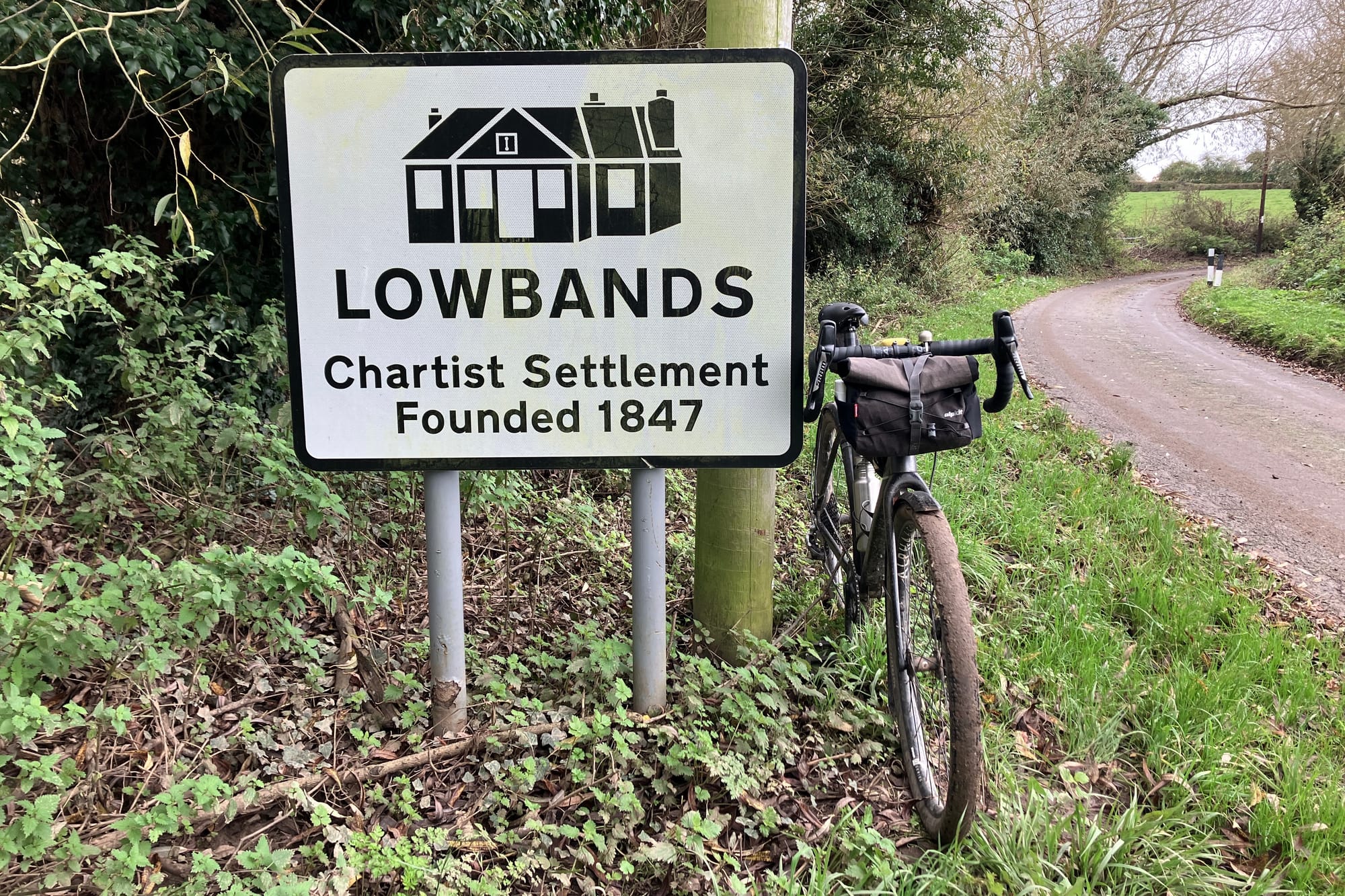
In the sleepy Gloucestershire countryside stands a village born from a bold idea: winning political power and economic independence for working people through land ownership. Lowbands was created in the 1840s under the Chartist Land Plan, led by Feargus O'Connor, to provide small agricultural plots and cottages for industrial workers seeking independence from urban poverty.
I’d cycled through Lowbands several times over the years before I thought to read more about the Chartists. The movement emerged in the 1830s, when the government granted property-owning middle-class men the right to vote but still left swathes of society disenfranchised. Chartists, named after the People’s Charter they drafted, wanted more radical reform. And settlements of homes and smallholdings were part of their plan.
Within a few decades, another movement was pressing for electoral reform – and this one arrived by bicycle.
Ultimately, despite riots and uprisings, the Chartist cause fizzled out, and their demands went unmet, at least in the short term. But within a few decades, another movement was pressing for electoral reform – and this one arrived by bicycle. After an autumn ride through the mud-strewn lanes around Lowbands, I read more about how, amid the cycling boom of the 1890s, bikes became an important tool for the suffrage movement.
In just a few years, the bicycle had already become a universal symbol of women’s emancipation. ‘I stand and rejoice every time I see a woman on a wheel,’ said American suffrage campaigner Susan B. Anthony in 1896. ‘It gives a woman a feeling of freedom and self-reliance.’ At that time, the bicycle was also poised to become a practical tool of militant resistance in the battle for the right to vote.
The Women’s Social and Political Union (WSPU), founded by cycling sisters Sylvia and Christabel Pankhurst, made effective use of bicycles. The London WSPU formed a brigade of Cycling Scouts in 1907, who rode beyond the city, spreading the word to suburbs and villages. Bicycles also made excellent getaway vehicles for the group’s more radical activities, including arson and vandalism.
According to The Glasgow Herald, for example, in 1914, two militants set out by bicycle in a failed attempt to blow up Burns Cottage in Alloway, the birthplace of the poet Robert Burns. Cyclists were accused of a number of ‘Pillar Box Outrages’, riding up to post boxes and damaging the Royal Mail with oil or corrosive substances. Golf courses were a favourite target for cycling suffragettes, either to tear up the green with their tyres or heckle politicians at play.
Dr Sheila Hanlon – 2018 Sylvia Pankhurst Memorial Lecture, Sheffield.
Manufacturer Elswick even produced a Votes for Women bicycle, painted in the WSPU colours of purple, white and green. It was embellished with a design featuring the WSPU’s medallion of freedom. Isn’t that rather extraordinary? Has any other brand ever named a model after an all-female radical political movement?
Many of the women involved in the suffrage campaign rode their bicycles for pleasure, as well as speedy getaways. Sylvia and Christabel Pankhurst had joined the socialist Manchester Clarion Cycling Club in 1896, when Sylvia was 14 and Christabel 16. Like other Clarion clubs, weekly rides gave people from cities the chance to get out into the countryside and spread the socialist message. The main organiser of the Kinder Mass Trespass, Benny Rothman, was also a Clarion cyclist.
It was at this point in my research that I read a friend’s story about cyclists at war (each year, hundreds of cyclists gather in the West Midlands village of Meriden to honour cyclists killed in conflict). His words sent me off on a detour about cycling resistance fighters. People like Simone Segouin, a French woman who carried messages using a bicycle she stole from a German patrol.
Her nickname was la plastiqueuse à bicyclette, the bicycle bomber.
Then there was Jeanne Bohec. Forced into exile in Britain by the war, she trained in sabotage and espionage before parachuting back into her native France in 1944. There she toured Brittany by bicycle, showing local resistance fighters how to do things like blow up railway lines. Her nickname was la plastiqueuse à bicyclette, the bicycle bomber.
In the Apennine Mountains of northern Italy, the bicycle connected different brigades of partisans. Michela Grasso, a Researcher at the Urban Cycling Institute, described how women would ‘carry hand bombs and battle plans hidden in their bike baskets, hidden under cauliflowers, potatoes and all kinds of vegetables’ and ride straight past unsuspecting enemy soldiers.
‘To an authoritarian government or an occupying army,’ wrote journalist and author Jody Rosen, ‘the bicycle was a menace, a tool of resistance that could be used by dissenters to sneak up and speed off, to organise and mobilise and elude.’ It’s no coincidence that one of Adolf Hitler’s first acts upon assuming power, in 1933, was to criminalise cycling unions.
Today in the UK, the political right remains engaged in a culture war against cycling. Our kids are on the front line because we’ve created a society where most children don’t travel actively or independently. And it’s affecting their wellbeing. According to Sport England data, fewer than 50% of children now get the recommended hour of physical activity a day.
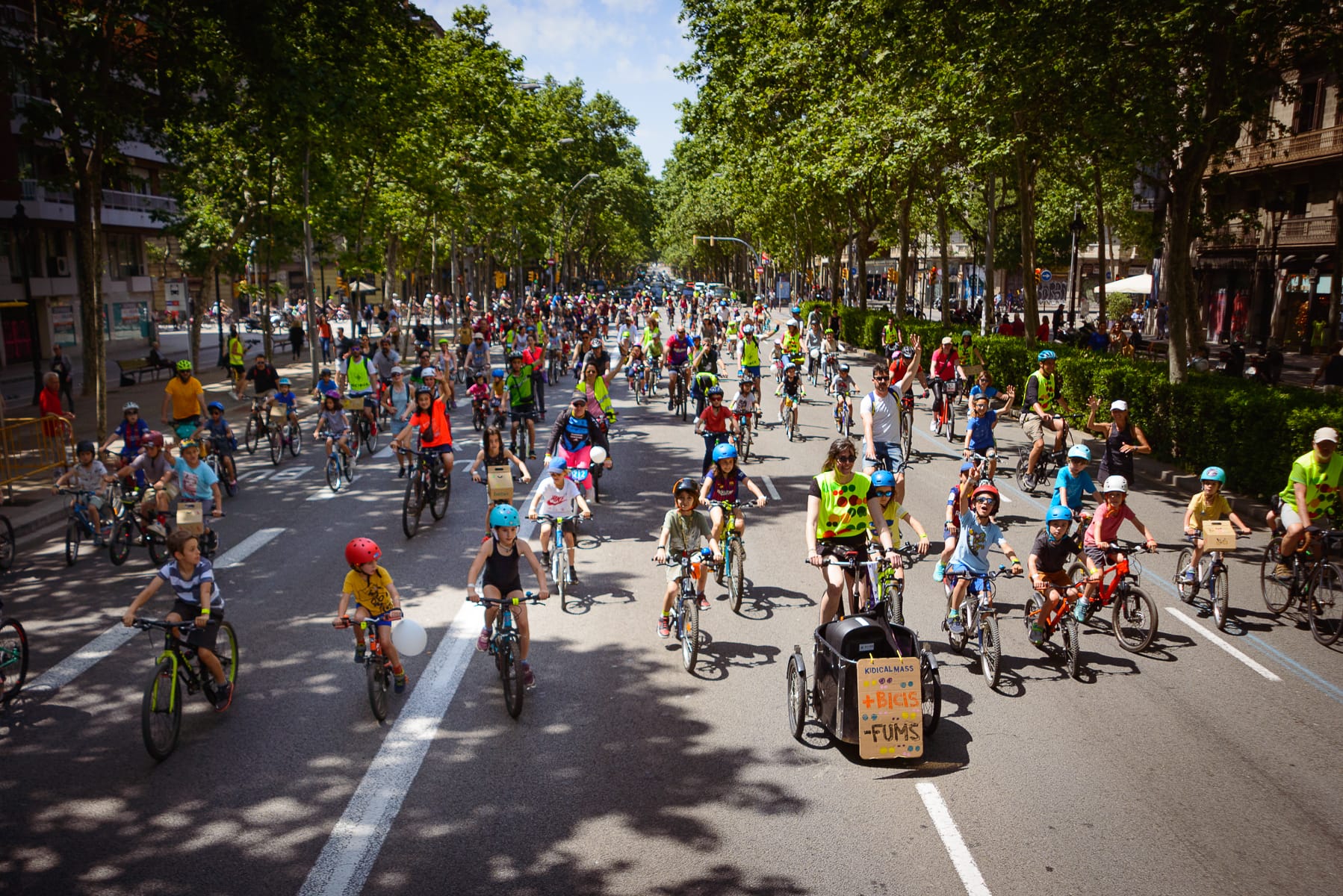
This turns a kid’s bike ride to the shops or to school into an act of resistance, an assertion – against societal norms – of their right to move freely by bike in a world designed around adults in cars. But the good news is that more and more adults are taking their side, including through the Kidical Mass movement.
Kidical Mass is an alliance of over 1,000 disparate organisations from Canada to Australia that stage action rides and organise school bike buses to promote safe, active, and independent travel for children. There’s probably one in a city near you.
Kidical Mass and its adult equivalent, Critical Mass, tap into the powerful political truth of cycling: with each turn of the pedals, a revolution gathers momentum.
Get my email newsletter
Sign up for FREE and treat your inbox to thoughtful writing about life on foot and awheel. No spam. Unsubscribe anytime.