The old way
This local track – one of my favourites to walk and cycle – is deeply rutted with memories.
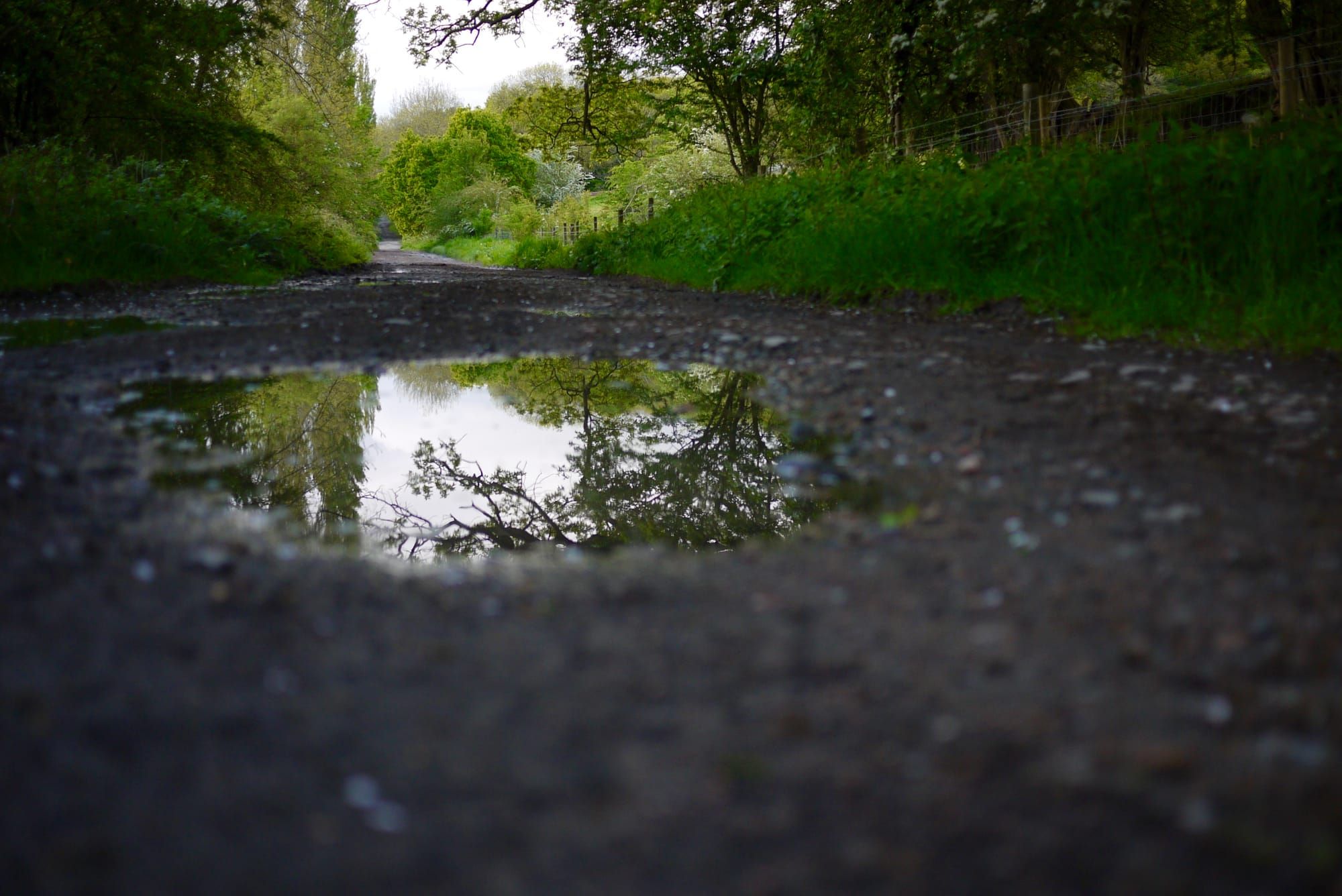
This road isn’t a road. At least not anymore. The Victorian building boom left it behind, even though it’s actually a more direct link between two villages than the route that replaced it. The new way got tarmac and traffic and more houses; the old way got deep ruts that keep cars away and a fringe of tangled woodland. Ideal for walking and cycling.
The track passes just a couple of fields away from the old farmworkers’ cottage where I grew up and my parents still live, so I’ve known it all my life. On a shelf in their house there’s a photo of my mum and me in the woodland that rises above the old way, taken in the years before I started school. I’m wearing my yellow mackintosh and clutching a hand-drawn map. She has a tall hazel pole, an impromptu walking stick found among the dead wood.
I know the scene well; we were mapmaking. We’d wander the woodland together for hours, exploring unofficial paths and abandoned quarry tramways, searching for fossils in the limestone and peering into the abandoned kilns. As we went, we’d draw new features onto our map, naming them prosaically. The muddy path. The pig path. The blue gate.
But the old way didn’t just lead my mum and me on our adventures; it also brought interesting characters to our door. People such as Jack the shepherd. By the time I knew Jack, he was retired and no longer working on the land. With a lifetime of walking in his legs, he’d spend long days strolling with his dog from his home in the village above us, across the fields where he used to work and back up the old way home. He’d lean on our gate to chat, squeezing the words out past a perennially lit pipe wedged between his teeth.