
A postcard from the Dales: thunder and lightning
Our two days of walking included a very apt flavour of ice cream and ended with a journey in the wrong direction.
We woke in the little village of Dent to the deep sound of a storm rolling across the Yorkshire Dales. Lying in our beds in the George and Dragon, we listened to thunder rumbling over the hotel and rain pelting the cobbled streets below.
It was due to clear soon, so we weren’t unduly concerned. We probably should have been, though. Later that afternoon we spent hours waiting at a deserted, trainless Kirkby Stephen station because a lightning strike had damaged the signalling on the Settle-Carlisle railway line.
Our eventual escape – on the only train to run that day – came in the form of a circuitous eight-hour train journey that began in the wrong direction and took us nearly to Scotland. But more on that later. For now, let’s go back to the beginning.
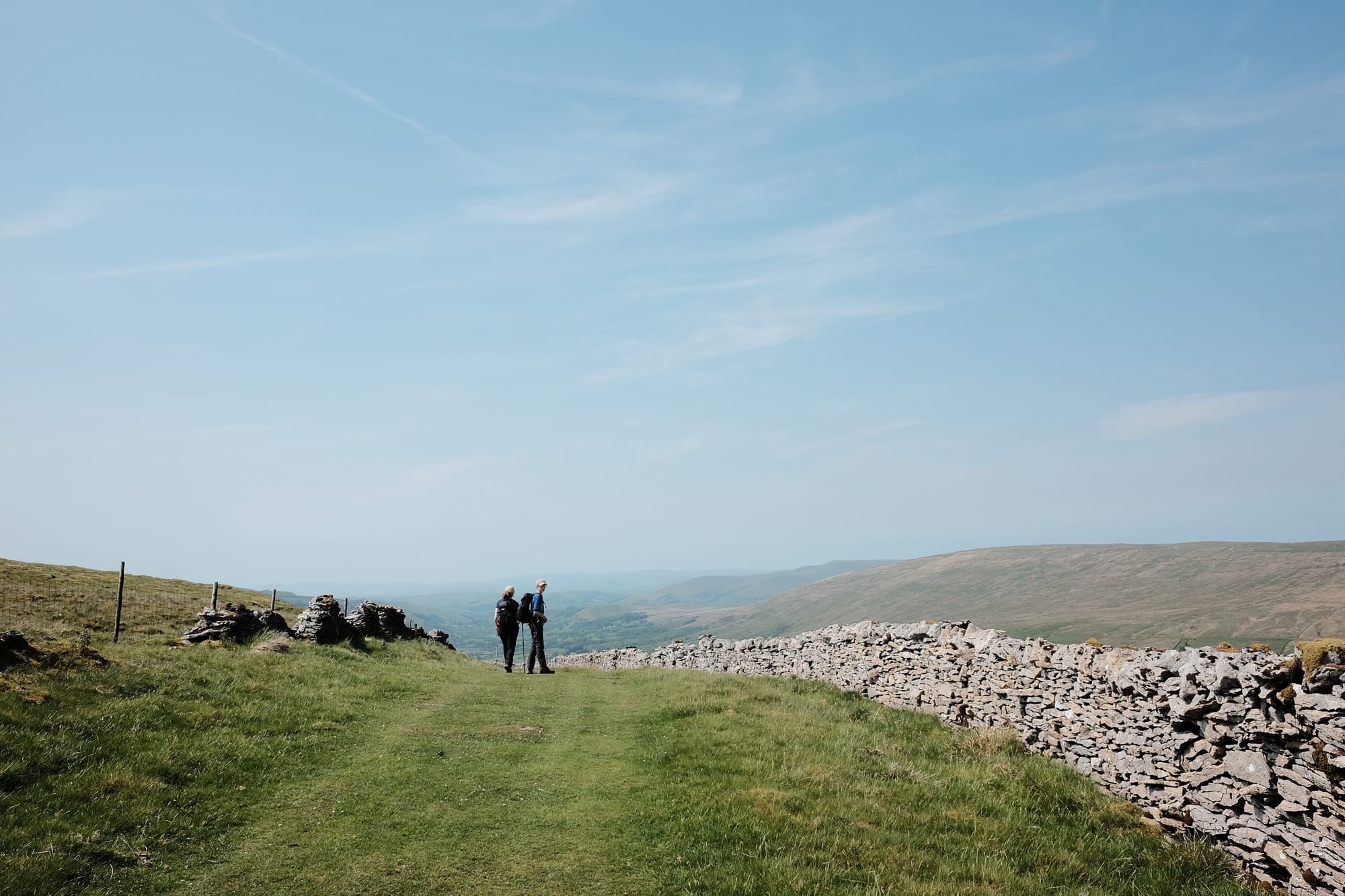
We were walking more of the Dales Way, the long-distance footpath that we’re tackling in stages when we visit family in the area. On our previous visit, we crossed the high point of the route – over Cam Fell. This time it was the section stretching 22km or so from Ribblehead to Sedbergh, with an overnight stop in Dent.
The train we’d caught to Ribblehead that morning was full of people enjoying half-term outings. Walkers like us. Families heading to attractions along the route. Others just there for the scenic journey. Out of the window, a patchwork of dry-stone-walled fields and escarpments rose above the farmland, announcing the wilder country beyond. Tall, yellowing grasses heralded lush spring turning to dry summer.
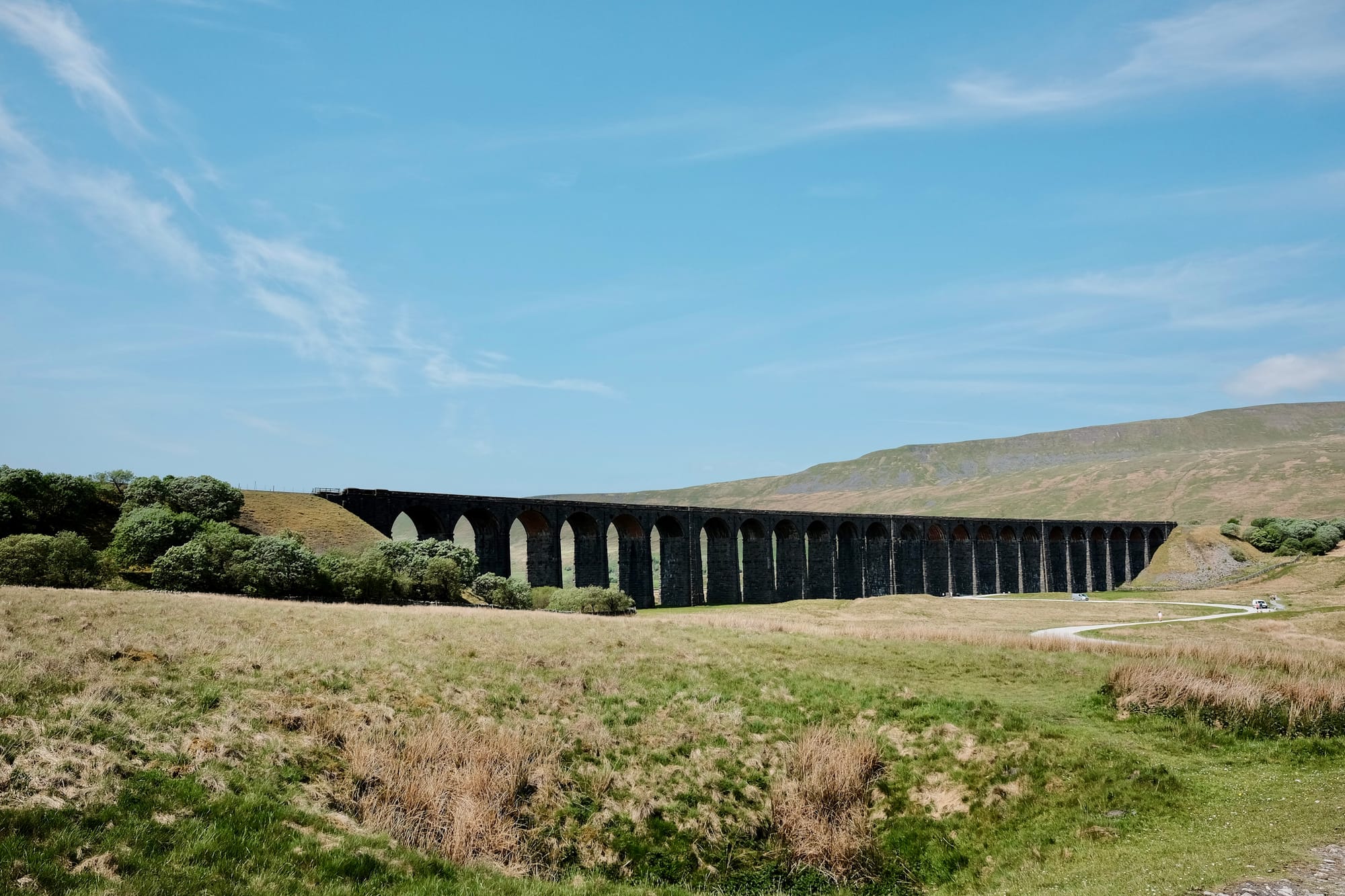
We alighted at Ribblehead Station, just before the famous viaduct, and followed crowds of people on the path towards the looming structure. Our progress across the valley felt slow compared to the huge strides of the viaduct’s stone and brick columns. But eventually, we were climbing up the other side, following the Dales Way High Route.
For a while, we shared the route with visitors heading up Whernside. Parents tiring out the kids in the hope of a peaceful evening. Couples on their day off. Retirees ticking off another walking trail. Then, the paths diverged and our family group of three-plus-dog continued by ourselves.
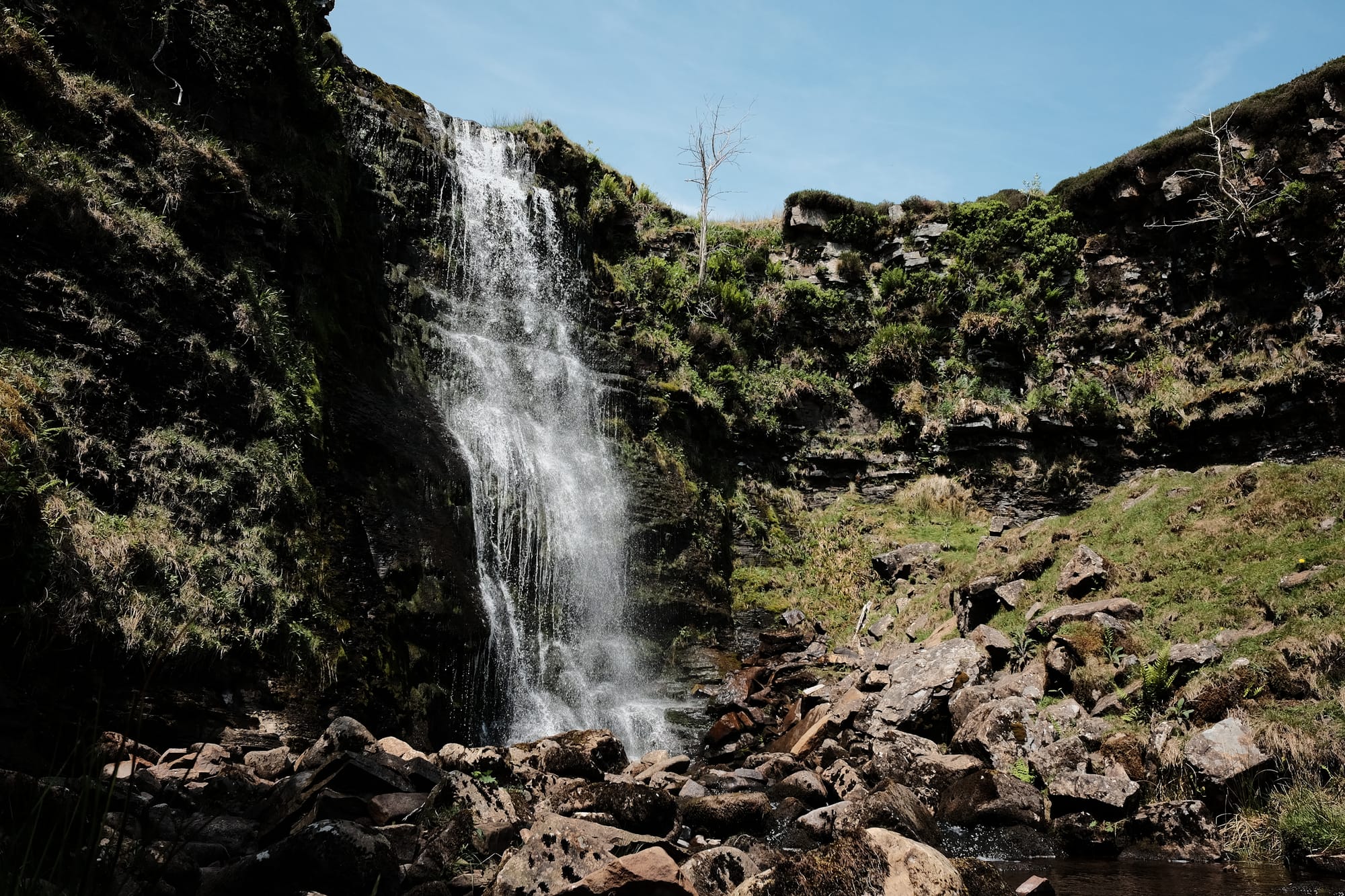
Just after Blea Moor, we took a diversion to explore the cascading waters of Force Gill. The little stream squeezes into a narrow channel before tumbling over a limestone cliff to a pool in the gorge below. We clambered down to enjoy the waterfall's cooling spray – relief from the midday heat for humans and dog alike.
Our route then followed the Craven Way, believed to be an ancient packhorse and drovers’ route once used for transporting cattle from Scotland. Today the land around the path is used by its wealthy owners to raise grouse for shooting. And, not coincidentally, the persecution of raptors – birds of prey that hunt grouse – is rife.
In 2017, a gamekeeper on the Whernside Estate was convicted and fined £1,210 for shooting two short-eared owls. A team of three RSPB investigators had happened to be visiting the moorland and filmed his crime. Many other offences go unpunished.
Landowners like to portray themselves as custodians of the countryside, but they are often its worst enemy – seeking to preserve their own privilege under the guise of protecting nature. As Helen Macdonald writes in her book H is for Hawk:
I wish that we would not fight for landscapes that remind us of who we think we are. I wish we would fight, instead, for landscapes buzzing and glowing with life in all its variousness.
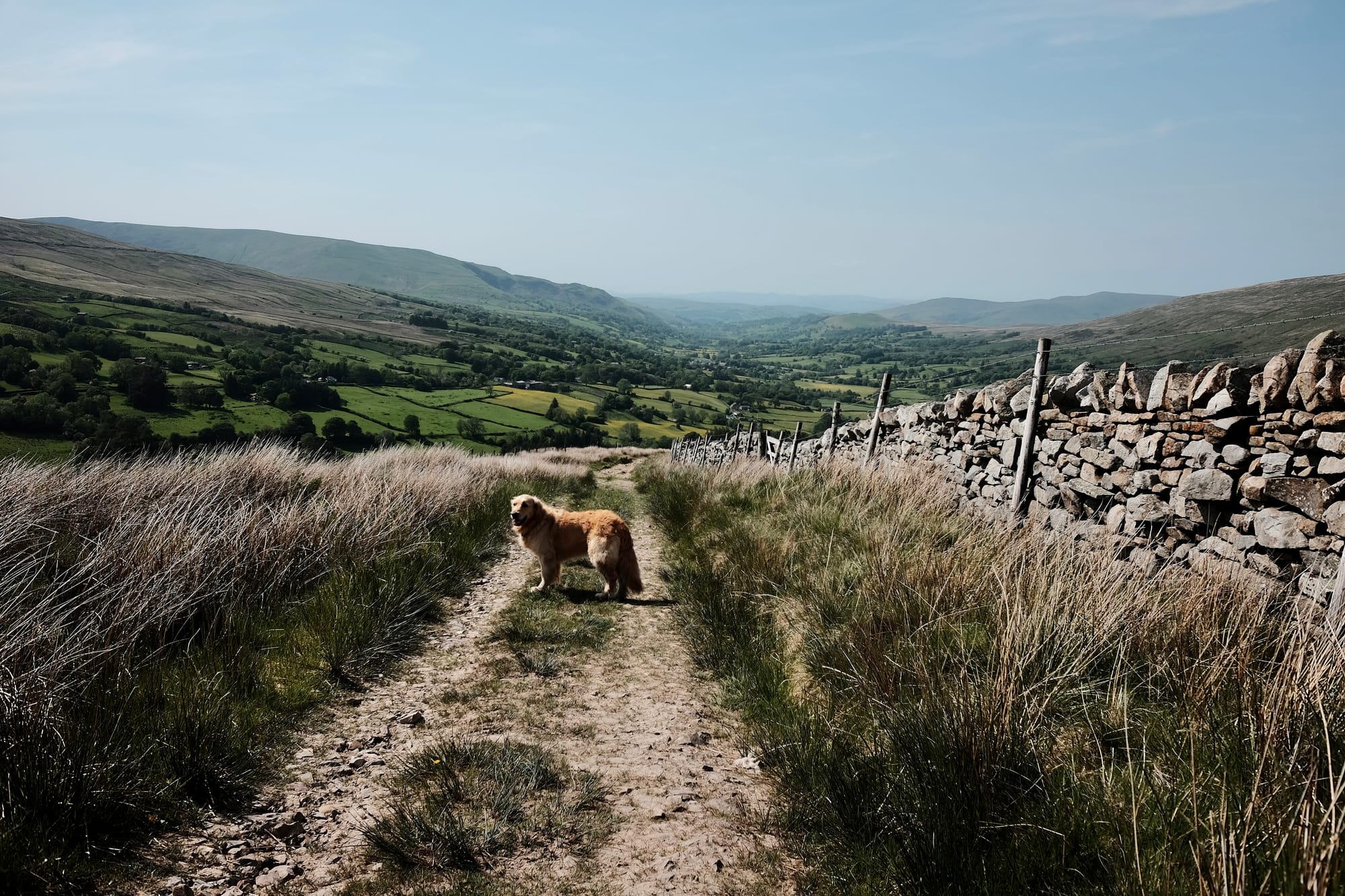
Leaving grouse moors behind, we dropped down along tracks and lanes to pick up the footpath that runs through the river meadows towards Dent. The afternoon sun retained its strength, and we were glad to be up here – with a hint of cool breeze – rather than sweltering in a city.
In Dent, the George and Dragon still bore the old winged-wheel emblem of the Cyclists’ Touring Club on its outside wall. Cyclists welcome. Walkers too. And, crucially for us, dogs. We settled in for the evening, devouring large plates of food while Lula the dog looked on enviously, unsatisfied with her own dinner.
The following day, after the storm had passed, we left Dent via the village shop, where we purchased a packed lunch for the journey. The sparse public transport in this part of Cumbria dictated a shorter day – finishing in Sedbergh, around 10km away, so that we could catch an afternoon bus connecting with our train.
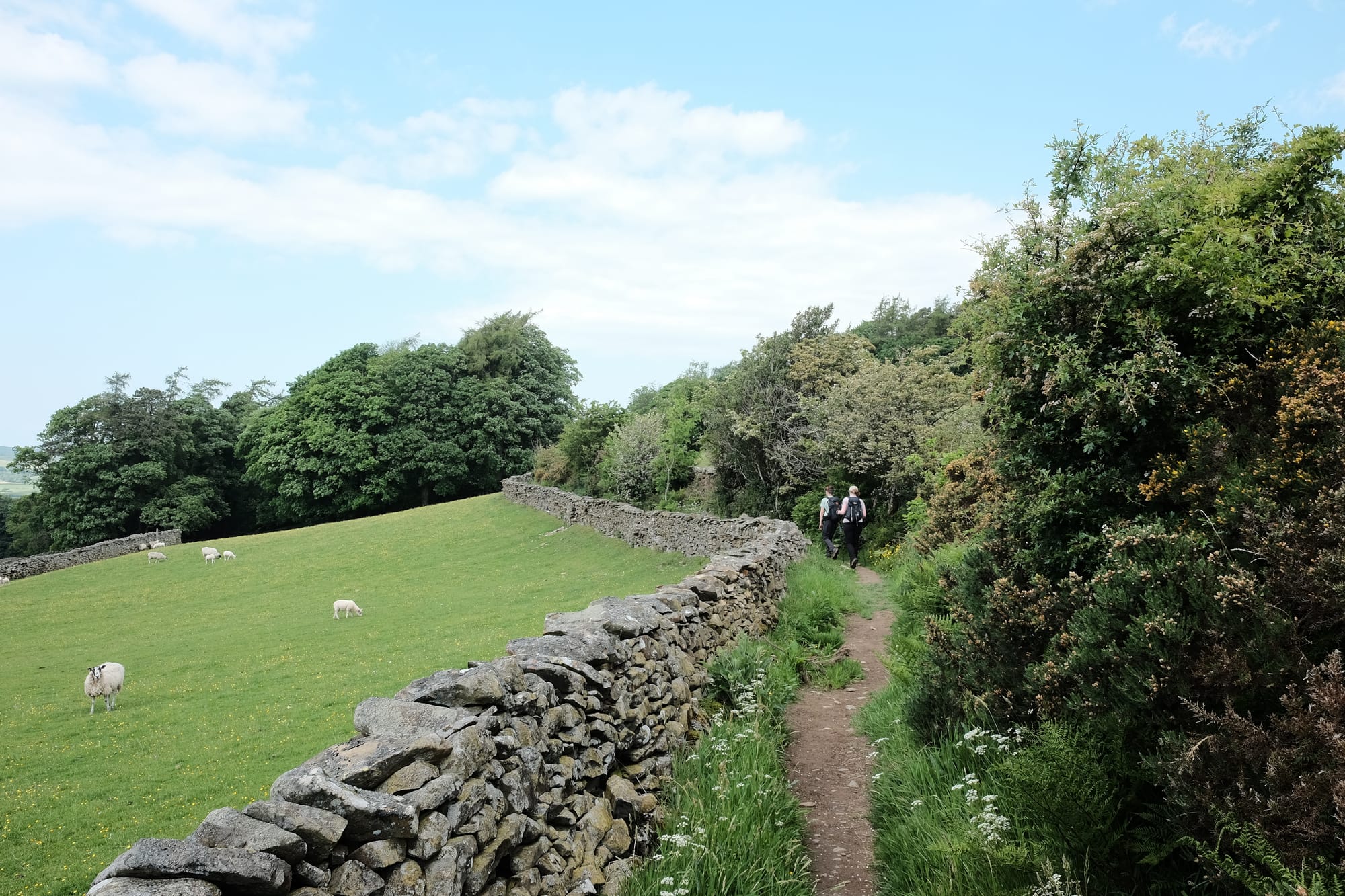
It was a day of meadows and rivers. We followed the Dee for long stretches and Lula immersed herself in the water at regular intervals, exhibiting an almost religious devotion to staying wet and cool in the heat. One last climb took us over Long Rigg and down into Millthrop. We crossed the river Rawthey and followed it through the immaculate playing fields of Sedbergh School before emerging into the town.
Here the narrow streets rattled to the sound of horse hooves and wooden wheels as gypsies and travellers began to gather for the annual horse fair in nearby Appleby. In his book about travellers’ old encampment sites, The Stopping Places: A Journey Through Gypsy Britain, Damian Le Bas explains the significance of horse fairs.
We depend on the horse fairs to meet. It is a quirk of our scatteredness: a few hundred thousand people at most, flecked around Britain’s damp islands, and we meet mostly at weddings, fairs and funerals.
We caught the community bus towards Kirkby Stephen train station and learnt from the locals on board that many people resent the disruption caused by the influx of travellers. The bus is cancelled during the fair because it can’t get through the crowds of people, horses and vehicles. We also learnt about a more pressing problem: there were no trains running.
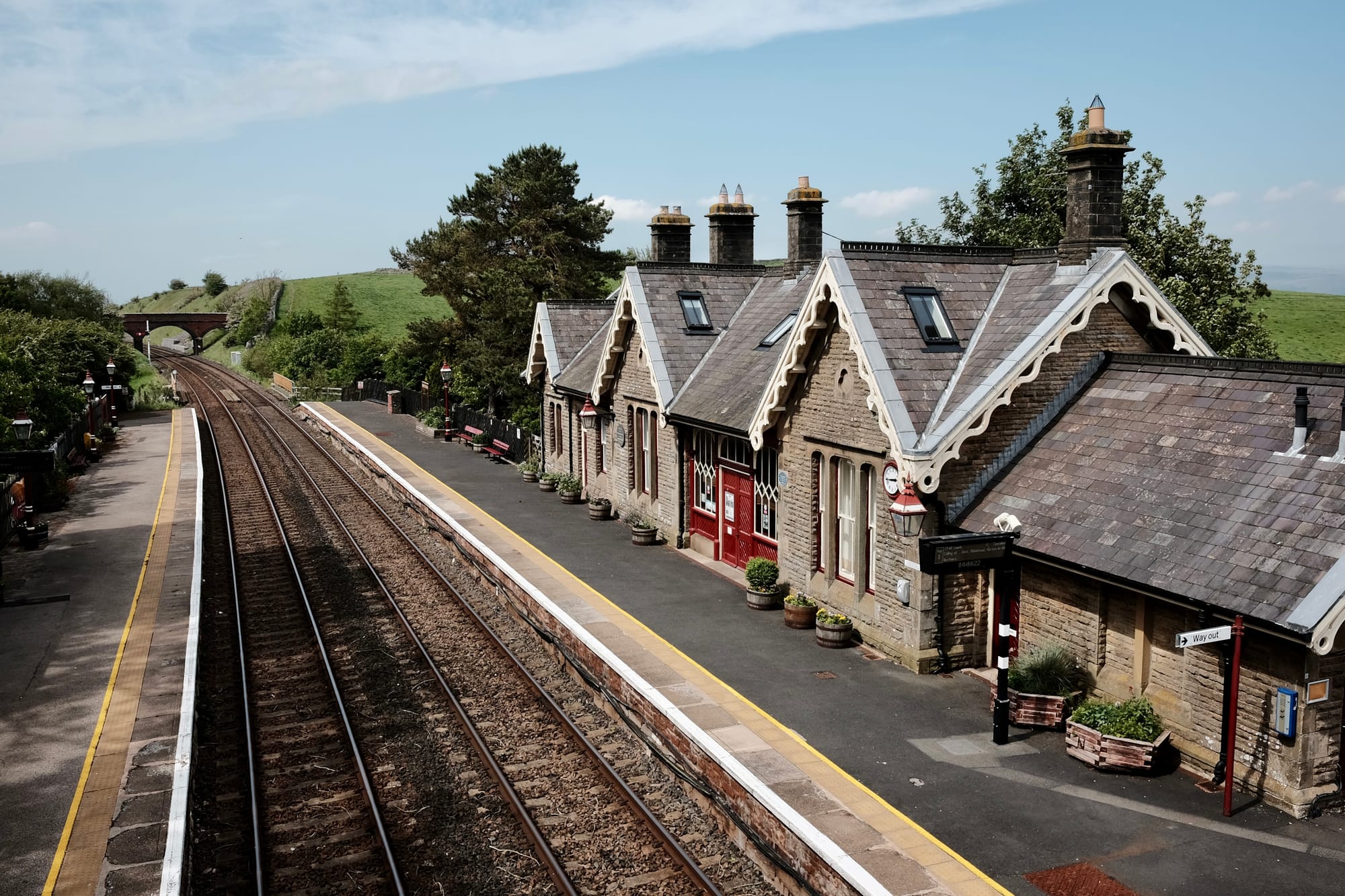
We decided to head for Kirkby Stephen station anyway and wait. And wait. And wait. We passed a couple of hours on the deserted platform. Eventually, as we were on the point of giving up, a train pulled up. We got on, but it only travelled one stop before turning back. The guard called the control room and was told that the repair of the storm-damaged signalling was still not complete.
After much confusion, it emerged that our only way back to Leeds would be via Carlisle, 80km in the wrong direction. So we travelled north before turning south and connecting to Leeds at Preston. By the time we arrived late that night, our journey had taken around eight hours. Fortunately, we were sustained by the enormous ice creams we had consumed on our way through Sedbergh.
We had found a shop selling the local brand, Lakes Luxury, and chose a flavour consisting of dairy ice cream with rich chocolate sauce and sticky cinder toffee pieces. Apparently, it was inspired by the weather around the dairy in Kendal where it’s made. The name of the flavour? Thunder and lightning.
Get my email newsletter
Sign up for FREE and treat your inbox to thoughtful writing about life on foot and awheel. No spam. Unsubscribe anytime.