
Above Silurian clouds
A week of high atmospheric pressure saw us happily marooned on hilltops, cut adrift in splendid Paleozoic isolation.

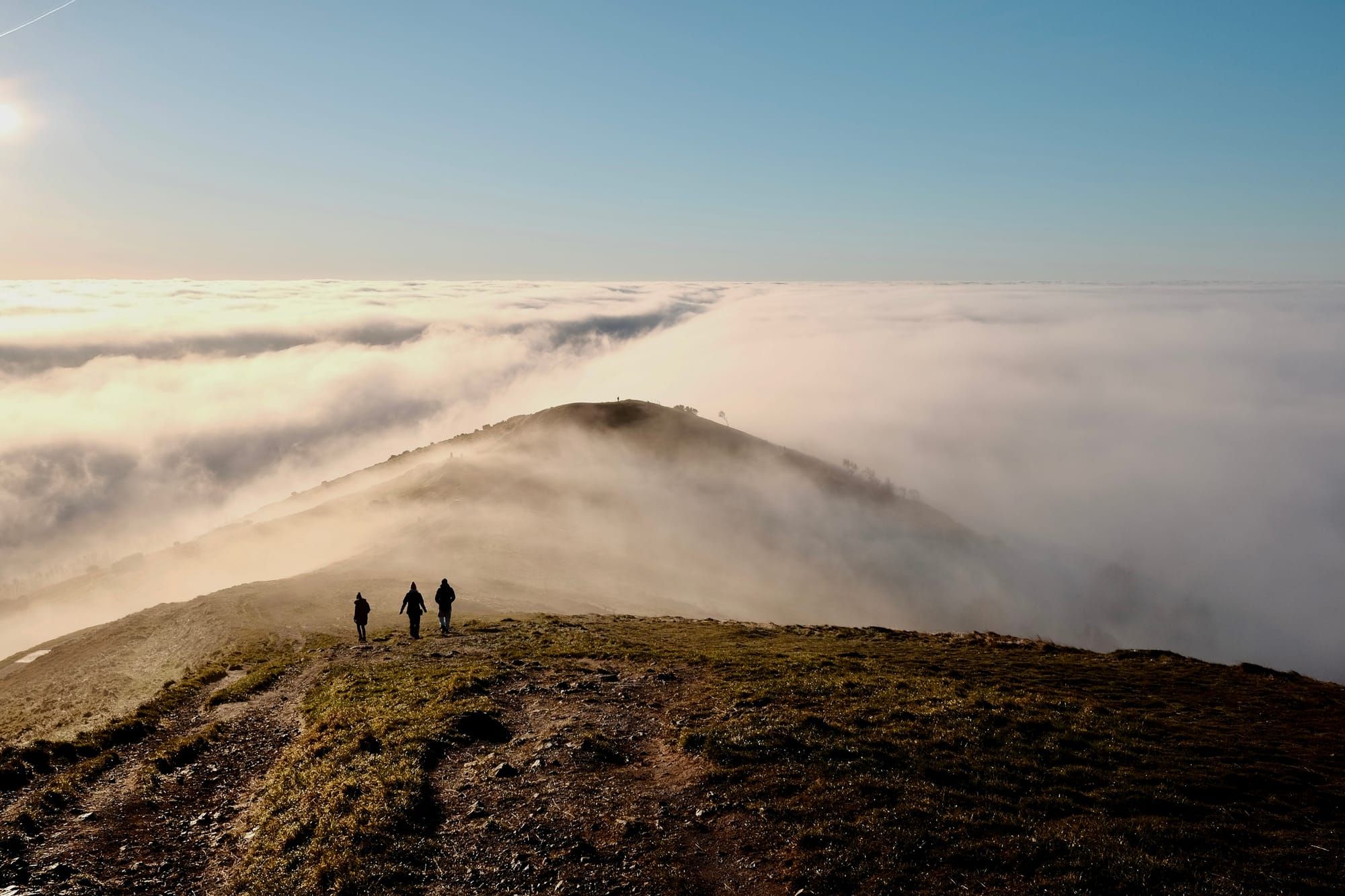
We stood among a small group of people at the summit and looked around us: an ethereal flood of cloud had drowned the vales of the Severn and the Wye as a temperature inversion trapped cold air and dense grey cloud at low level. Up where we were, above its high water mark, the day was mild and sunny.
This warm, clear world into which we’d emerged echoed another that existed here 430 million years ago. Back then, a shallow sea flowed to the base of these ancient-rocked hills. In contrast to the barren centre of the continents, this shoreline teemed with life. We’d have encountered mounded coral reefs, fish and plants – now preserved as fossils in the low limestone ridges that abut the higher hills. Maybe, if we could have travelled back and splashed through those shallows, our fossil footprints would be down there too.
Standing above the cloud on a January morning, the winter sun swept away the millennia between us and this Silurian sea. The world had turned upside down and uncoupled the mundane tethers holding us to the everyday world. We could see no roads or cars, no houses, no workplaces – and no people, aside from the few others gathered around us. On this blank page our imaginations were free to write whatever stories they wished and transport us back to prehistory.