
Cycling through winter
Spending one lonely, dark season pedalling on rollers in my garage convinced me I'd rather face the cold and wet.
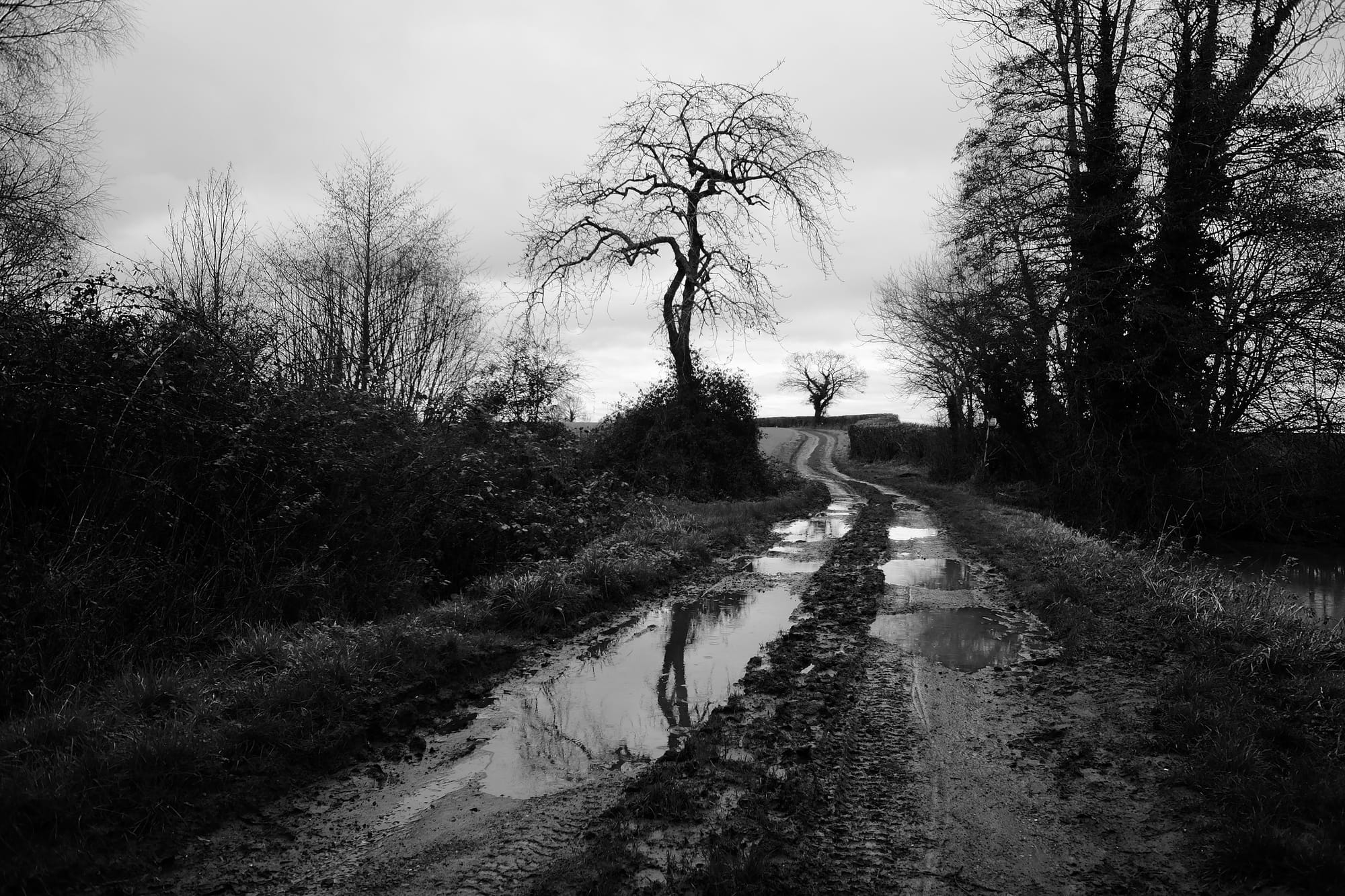
We are in the middle of a long and rainy British winter. Not cycling weather. That’s the perception, anyway. Cycling weather is the sunshine that beats down on a peloton sweeping past fields of sunflowers, or on the dusty trails of Marin County, birthplace of mountain biking. Instead, we have pouring rain and plunging temperatures, conditions that drive many road cyclists indoors to their stationary trainers. One winter, I was among them.
With a young child and limited time to exercise in the short days, I set my bike up on rollers in the garage and hunkered down for a winter of indoor cycling. No virtual racing on Zwift for me; I had to make do with determination and watching TV shows on a laptop balanced on a workbench. Unfortunately, I chose Les Revenants, the French supernatural drama with a sinister Mogwai soundtrack. It made for a bleak few months.
I pedalled through that winter in the cold garage, dragging myself out there every couple of nights for another long hour on the rollers. By spring, I had resolved to ride outdoors year-round. It was hardly a new concept. For as long as there have been bikes, people have ridden in winter. In March 1919, cycling writer Walter MacGregor Robinson, known as Wayfarer, crossed the Berwyn Mountains in deep snow:
In spite of all our difficulties – and it was no easy matter to fight our way through the snow and against the brisk north-wester - we had time to admire the wonderful world in which we found ourselves. Everything - or nearly everything – was pure white, which glistened in the sun and dazzled us. As we neared the ridge we found the wind had a curious effect on the snow, which looked for all the world like the ruffled sand of the sea-shore when the tide goes down. Our crowning joy came on rounding a bend at the highest point. Then we glimpsed that promised land. The mountain side fell away and rose again, and in the misty distance we saw the snowy peak of a great fellow thrust up to the clouds. The nearer mountains were wrapped in what looked exactly like satin coverings.
Tales like this can shape a belief that winter riding is an extreme adventure. It’s for the sort of person who longs to test themselves on a challenge like the Iditarod, which runs 1,000+ miles overland along a sled dog trail through the Alaskan wilderness. Or the Strathpuffer 24-hour mountain bike race in Scotland, which promises ‘17 hours of darkness, miles upon miles of gruelling terrain and a brutal mix of ice, wind, hail, rain, mud and snow’.
But winter can, and should be, for ordinary riding too. In the Finnish coastal city of Oulu, the fourth most northerly city in the world, people ride through temperatures that can drop to -30C. Despite the conditions, 50% of children cycle to school. Even in deep snow, school bike racks are full. It helps that Oulu’s culture and infrastructure support riding, including a 900km network of safe and well-lit cycling and walking paths.
Oulu has normalised winter cycling. And that includes wearing everyday winter clothes rather than overly technical gear. People ride their bikes in the same clothes they’d wear to walk to the bus stop or from their car. I don’t have to deal with freezing Finnish temperatures, but I’ve found it much easier to keep my feet warm (a deal-breaker for me) since I swapped to flat pedals and ditched clipless shoes. It means I can ride in any shoes or boots I want – even insulated wellies.
Commutes or errands are much simpler when you don’t have to dress up just to ride, or carry a whole change of clothes for when you arrive. I’ve been helping my parents cut their hedge this winter. I just ride over in my old clothes, warm wellies and insulated gardening gloves, work in the garden, then ride back.
I have winter clothes, of course, but they’re suitable for a whole range of outdoor activities. My most useful item? Probably a thin merino beanie that fits under my helmet and over my ears, keeping the wind off and the heat in. It’s a task for which David Pulsipher, a Colorado-based advocate for winter riding, prefers his trusty balaclava (the ‘one key piece of gear that I use almost non-stop from November to April’).
David shares the benefit of his experience commuting in all weathers on his Bike Season feed. You might expect to find photos of him astride something like a high-end fat bike, but when the snow lies thick on the ground, David rides a bright red Diamondback frame he bought from Craigslist. This is his snow bike.
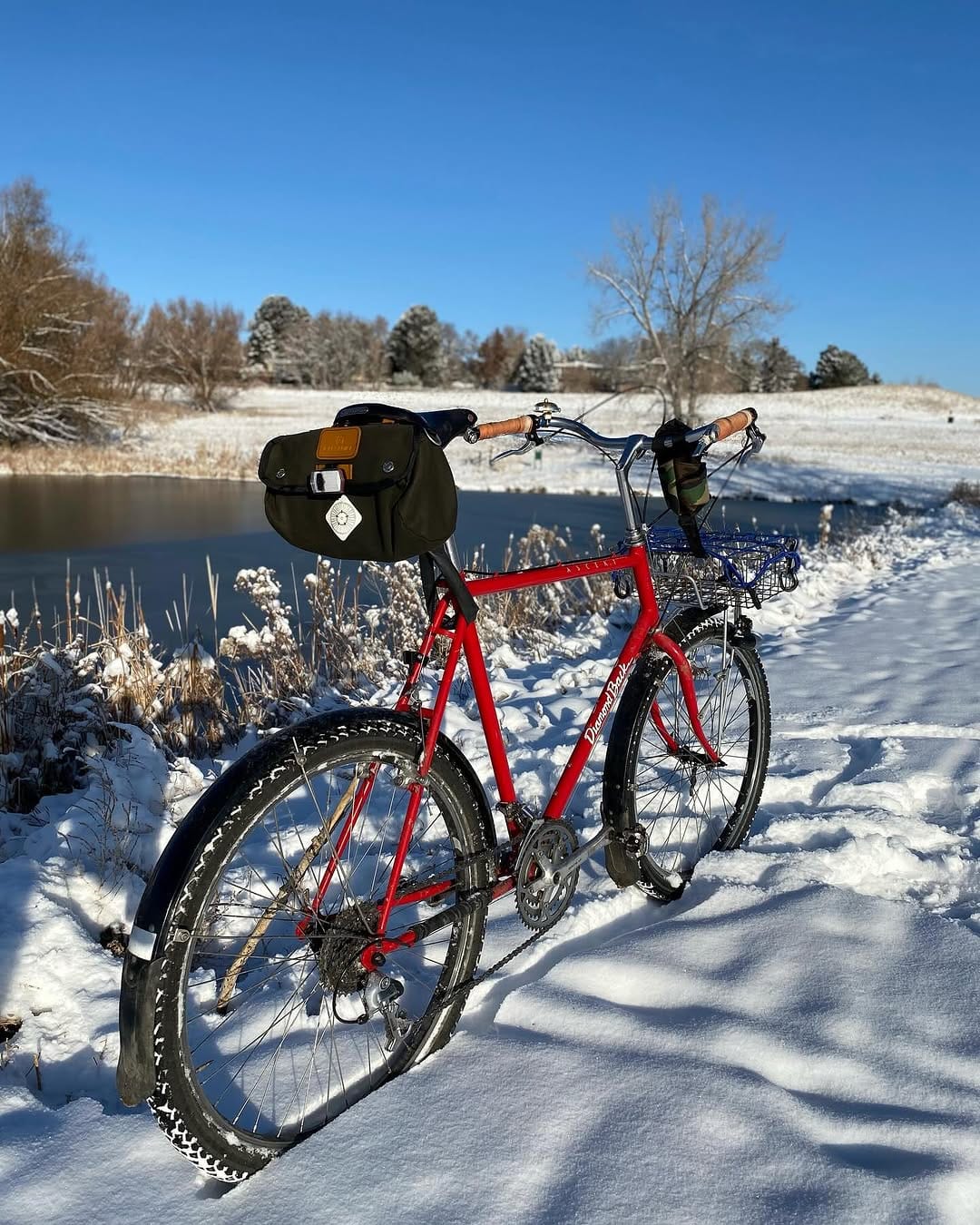
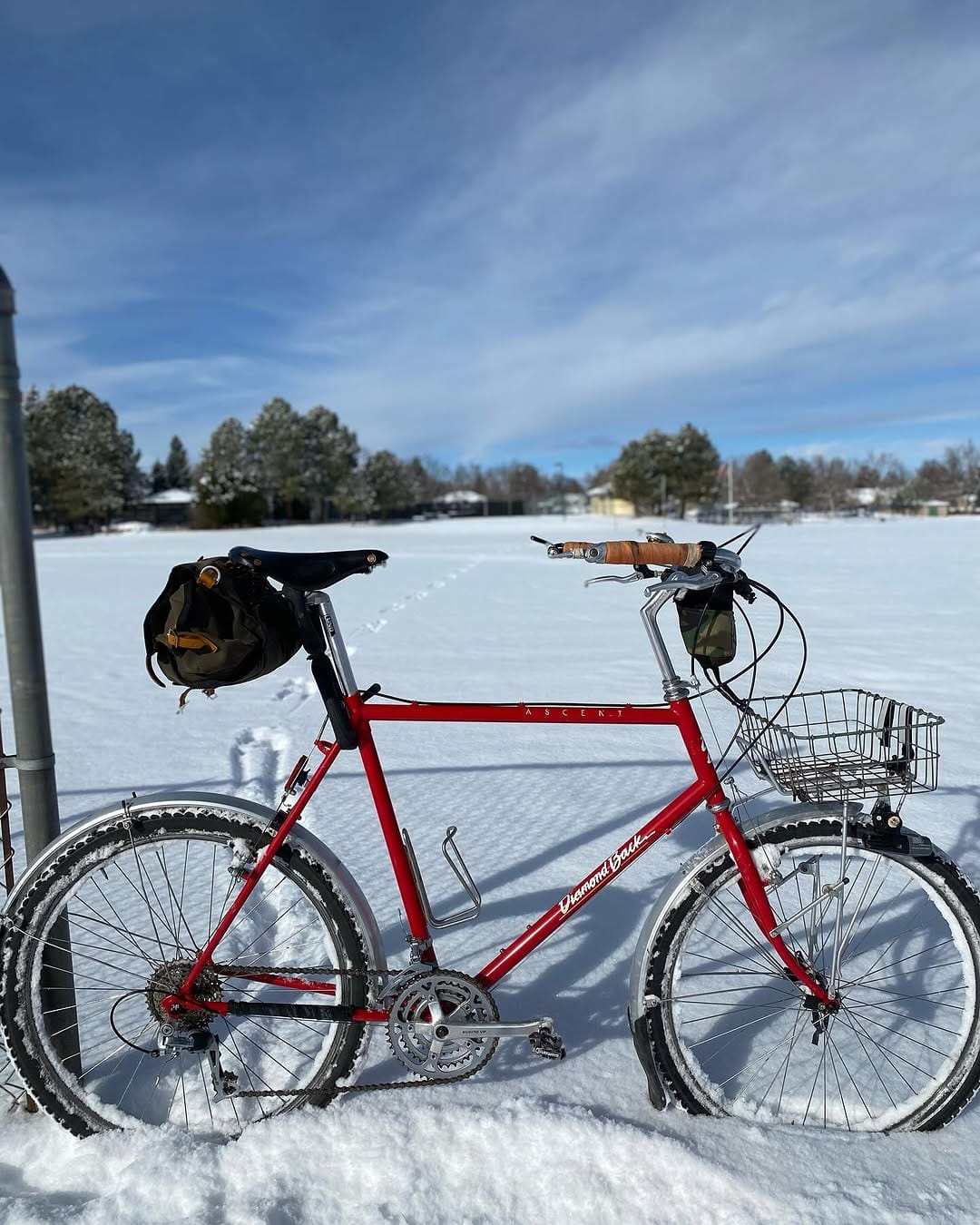
David Pulsipher’s snow bike. Photos: bike.season
Fitted with studded tyres, the bike is only called into action when there’s snow on the ground. Come thaw, it goes away again. This means David doesn’t have to swap studded tyres on and off his main bike, and he won’t be tempted to ruin the studs by riding on them when the snow melts.
“Having a dedicated snow bike is a luxury, no doubt,” he says. “But it doesn’t have to break the bank. I found this frame on Craigslist for $65. The other parts I cobbled together from previous builds. The only other truly unique things I brought to the table were the tyres and rack. All in all, we’re looking at about $200 to get this guy out the door. With a little budgeting and planning over summer, you could have a ripper ready for winter.”
If you live somewhere that gets snow fairly reliably, this is a great idea. Our winters are wet rather than white, so I fit mudguards and knobbly tyres to my gravel bike for the muddy, sloppy paths and filthy roads. Each spring, I look forward to removing them again, the changing seasons marked by hanging the tyres and mudguards back up in the garage.
Although I don’t love cycling through our wet winters, I like it a lot more than riding indoors. And, besides, I don’t have a choice now; I sold the rollers on eBay.
Get my email newsletter
Sign up for FREE and treat your inbox to thoughtful writing about life on foot and awheel. No spam. Unsubscribe anytime.