
Darkness, my old friend
A pre-dawn dog walk stirred thoughts about how society resists the close embrace of darker nights.

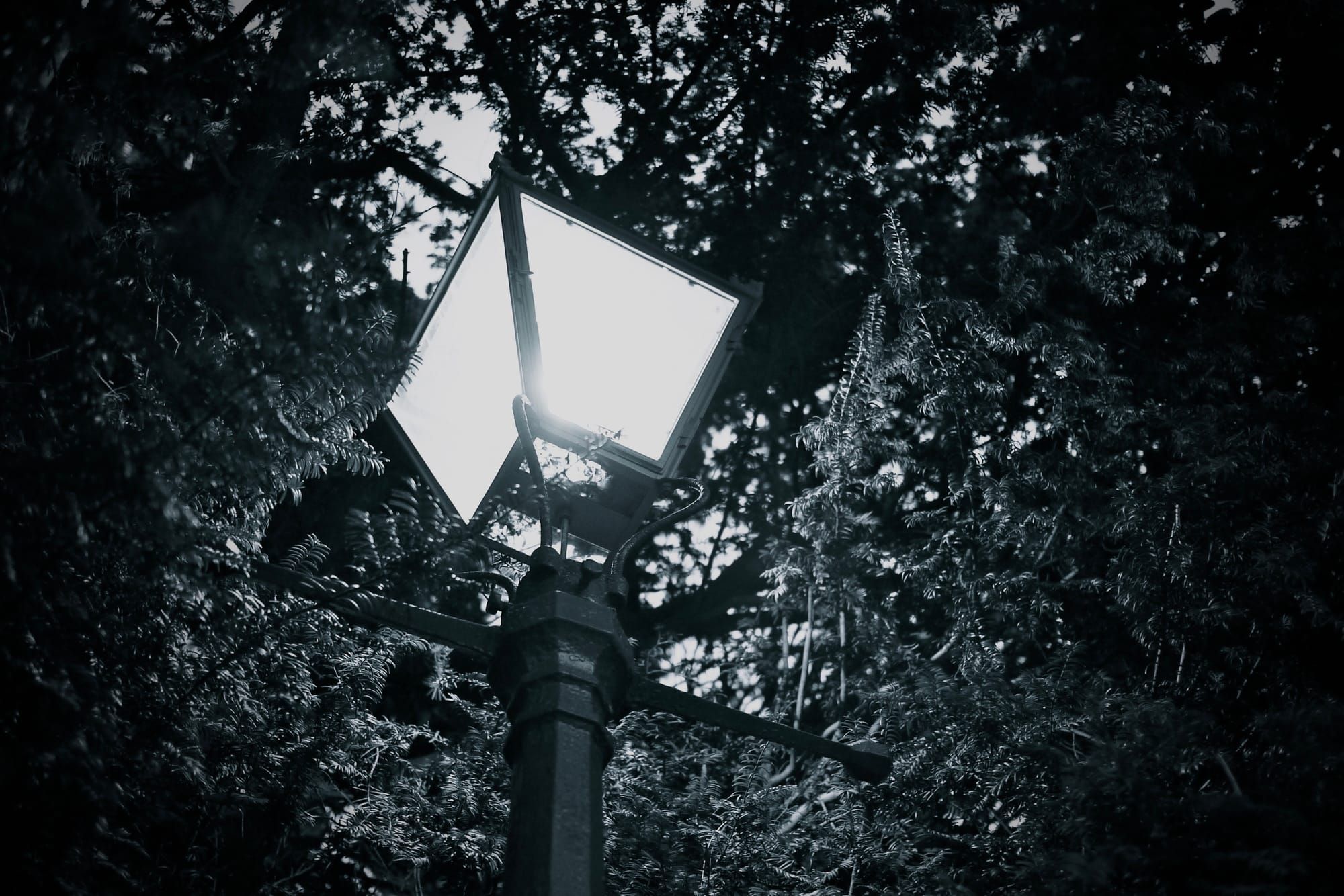
It was 6am, and I’d been walking on the hills for an hour before I passed another person. They were easy to spot; their headtorch beaming thousands of lumens onto the path as they strode towards me. Close up, the light was blinding, and I had to raise a hand to shield my eyes. My fellow walker didn’t seem to notice my discomfort, or to care.
But why did they feel the need for such a bright light? Why come out in the darkness, only to deny its existence? I’d walked torchless miles on these paths precisely because I wanted to feel the darkness around me. Maybe this makes me a bit odd. Transgressive, at least.
Light is a powerful symbol in religion and culture. Its divine presence shines enlightenment upon believers, warding off the sin that lurks in the shadows. So it follows that to seek out darkness is to look for trouble, or at least to exist for a few hours beyond the gaze of polite society.
In Cider with Rosie, Laurie Lee recalls playing ‘games in the moon … games that the night demanded’. A favourite was called Fox and Hounds: