
I've joined a cargo cult
A secondhand e-cargo bike has delivered me into a select but growing group of people who know how to make errands fun.

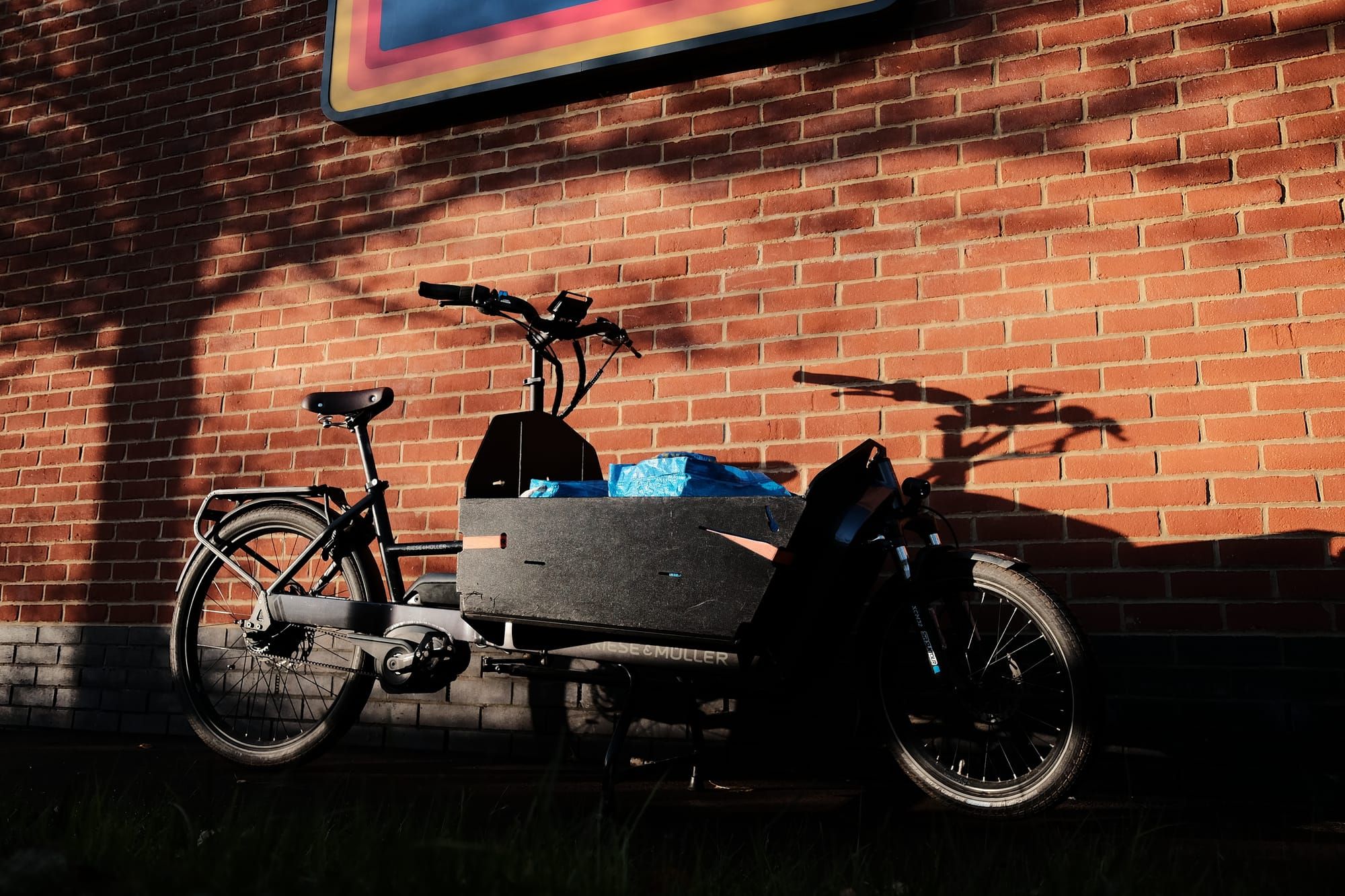
Outside the supermarket, I lift two weeks’ worth of groceries into the front box of our e-cargo bike, ease it off its kickstand and set off back home up the hill. Despite the combined weight of the machine and the shopping, it’s easy going. We (the bike and I) glide along. The motor is a gentle, comforting presence – like a parent’s hand on a child’s back as they learn to ride. I’ve got you, it says. Just turn the pedals and enjoy the ride.
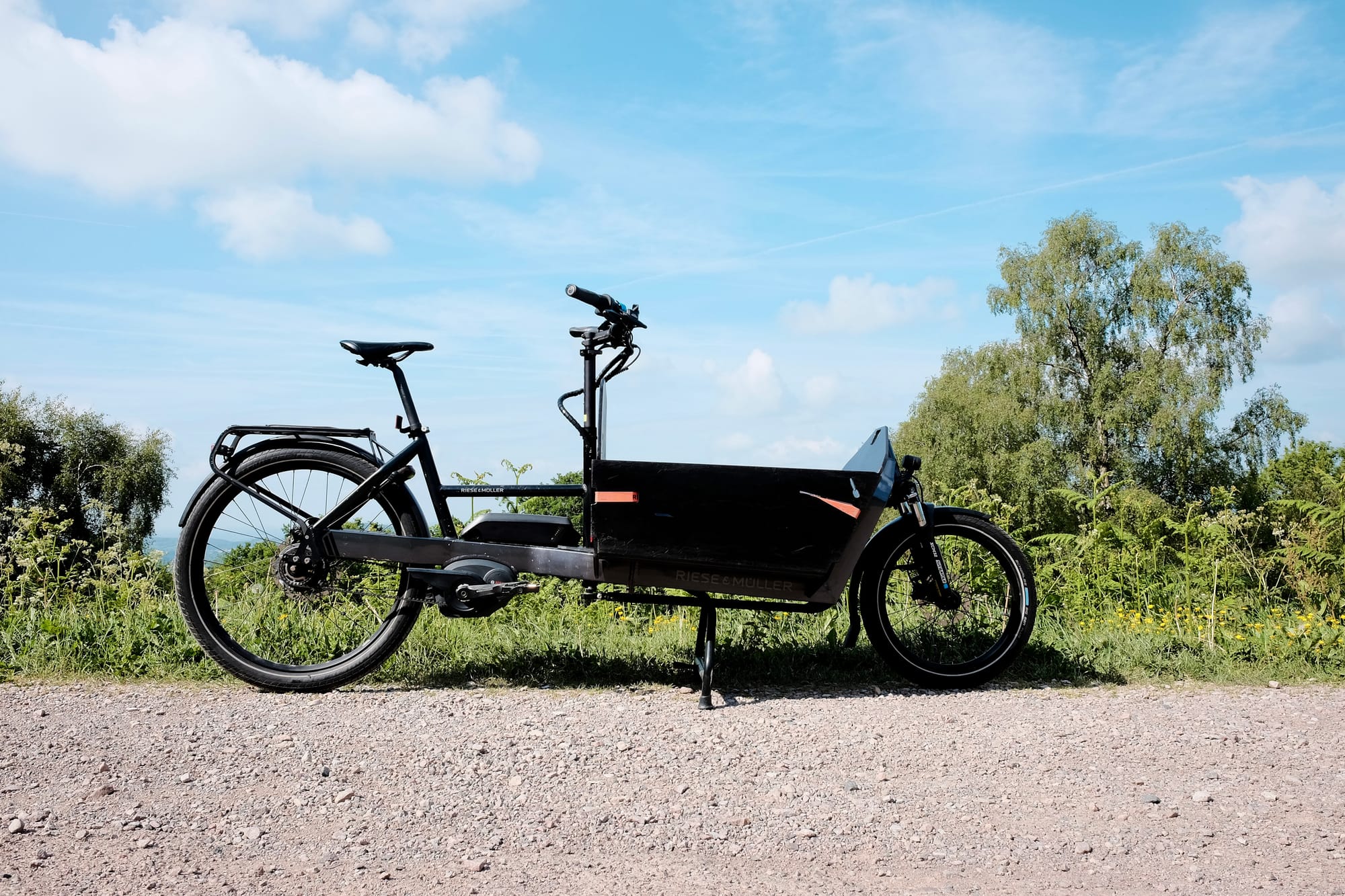
In the UK, cargo bikes have somewhat of a cult following among a small but passionate ridership. They’re yet to go mainstream here, as they have in countries like France, Germany or the Netherlands. And as a result, the secondhand market is small. It took months of searching before we found a Riese & Müller Packster 60 Vario that fitted our needs. It was well used but in great condition, and up to the job of hauling stuff up big hills in all weathers.
Riding the bike fully loaded is serene, and not just because of the power assist. The machine feels nimble despite its bulk and the front box glides sideways when I make a turn. It’s easy to balance at low speeds, and quickly gets up to the motor’s 15mph maximum. Once there, if the road is level, I turn off the assist and maintain momentum by leg power alone. Downhill, gravity takes over and the bike gathers speed. An incline demands assist once again. How much depends on my mood. Sometimes, I eke out the battery on the lowest ‘eco’ setting; sometimes I flick it all the way up to ‘boost’ and feel the bike reel in the hill.
Unsurprisingly, e-cargo bikes are an unusual sight in the small town where we live and ours often attracts comment. What a great way to do the shopping. Mind if I take a photo? How about letting me ride in the front? It’s like the early days of electric vehicles, when spotting one would be a novelty. That could be about to change, though, as e-cargo bikes demonstrate their potential to replace cars and vans for short journeys.
London cycle couriers have already added e-cargo bikes to their fleets. Companies like Pedalme offer passenger services too. Overall, cargo bike use in the capital doubled between 2022 and 2024. In Oxford, Pedal and Post has introduced Minimal cargo bikes (like tiny vans with the rider covered by a cab). Meanwhile, the bikes of worker-owned Pedal Collective are plying the streets of Bristol. Most major cities have something similar.
Things are changing outside big cities, too. Cargodale is making the model work in Calderdale, delivering goods across Todmorden, Hebden Bridge and the surrounding communities. In Hereford, Pedicargo has integrated recycling into its business model. It uses e-cargo bikes coupled to powered trailers to collect recyclables from city-centre businesses, then processes the material at its depot.
Why not use electric vans, which can carry 10 times the payload of a cargo bikes? Because a van weighs 60 times more than a cargo bike. The result, as the Cyclelogistics Ahead Project points out, is that e-vans require motors delivering more than 80 kW, whereas an e-cargo bike needs just 0.25 kW (plus 0.1 kW from the rider). They reduce emissions, reduce traffic congestion and are fun to ride.
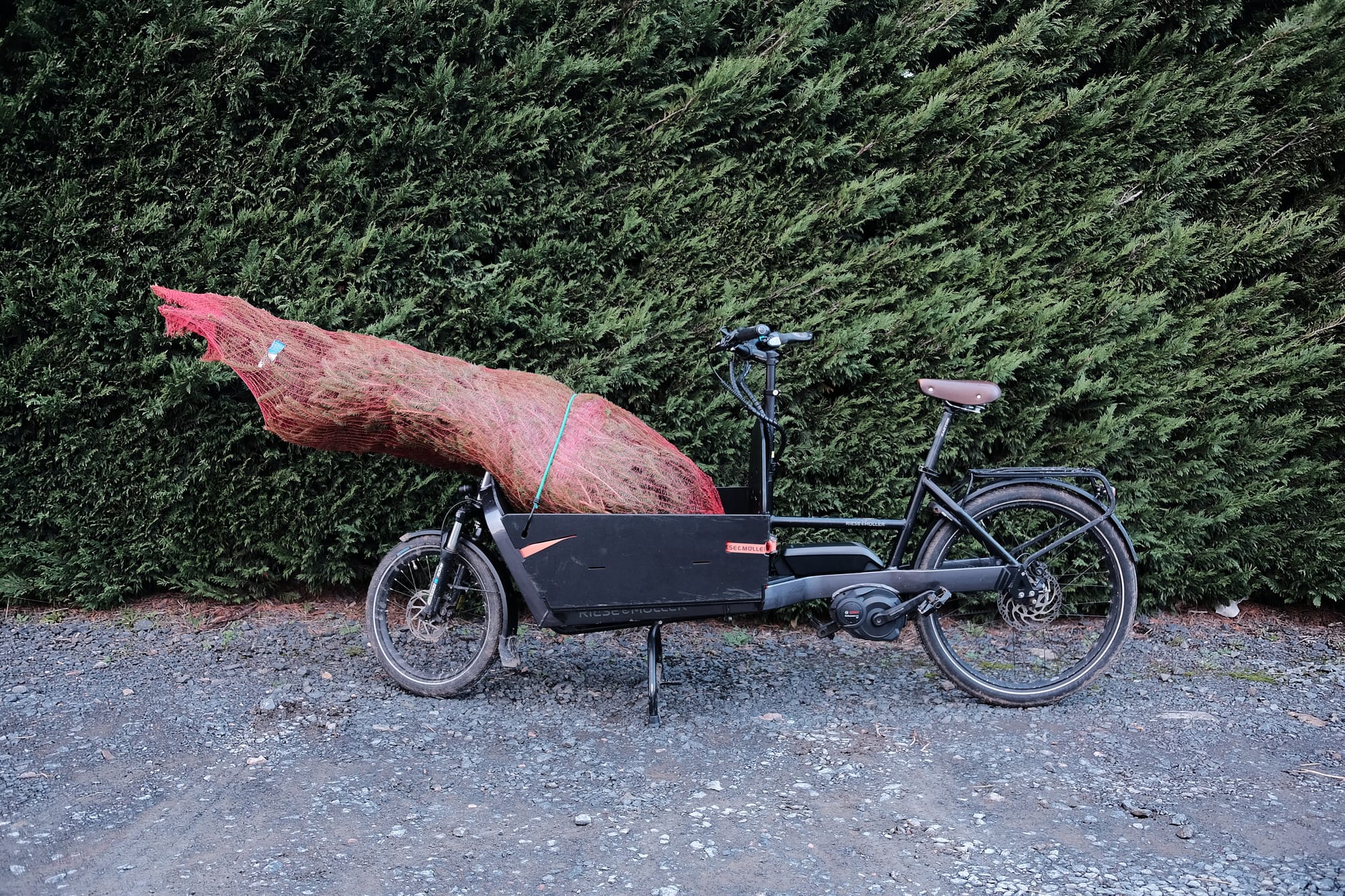
Our family bike’s main job is to make carrying stuff enjoyable, and we haul everything from G's cricket kit to our Christmas tree. But e-cargo bikes are also great for transporting small children. We were inspired to get one, in part, by seeing another parent using theirs for the school run when G was at primary school. Since then, a major research project has been studying the potential for e-cargo bikes to replace cars on this kind of journey.
ELEVATE is a £1.71m project run by the University of Brighton, University of Oxford, Technical University of Eindhoven and Technical University of Dortmund. As part of its research, 49 households across the suburbs of Leeds, Brighton and Oxford were loaned an e-cargo bike for a month in summer 2023.
From participants’ positive reactions, researchers began to develop a concept of ‘e-cargo bike citizenship’. They found evidence that e-cargo bikes could encourage people to switch from their cars for some journeys, and in the process also normalise cycling as an everyday family activity. Not everyone would want one – or have room to store it – but these bikes could work for a significant minority.
Eleven of the households in the trial borrowed e-cargo bikes again the following winter. By Autumn 2024, 10 trial households had bought e-cargo bikes. Summer trial households cycled around 8,000 km (38–42 km per household per week). And over 50% of that distance was replacing car use. (Global Cycling Network has made a video about ELEVATE if you're keen to know more.)
So could I soon be part of a mass movement, rather than a cult? I hope so, because I’d love to share the joy of moving this way. Plus I’ll be able to stop evangelising about e-cargo bikes, and I’m sure everyone will be grateful for that.
UPDATE
On 19 January 2026, Cargodale announced that they’d ‘taken the difficult decision to close their cargo bike delivery service’.
Cargodale grew from a self-funded project during the pandemic to a fully-fledged service for over 50 local businesses. They helped to inspire other operators and show that bike delivery ‘can work even in the brutally hilly South Pennines’. But increasing overheads and changes to the retail sector have led to their decision to park up their bikes for good.
And on 26 January 2026, Pedal and Post shared the news that it was closing after 14 years following the loss of a major client. Their statement said they ‘firmly believe this is not the end for cargo bike logistics’ and pointed to major carriers investing in low-carbon, bike-based urban delivery models.
Being a pioneer is tough.
Get my email newsletter
Sign up for FREE and treat your inbox to thoughtful writing about life on foot and awheel. No spam. Unsubscribe anytime.