
Riding Danishly
What connects cycling on a Jutlandic peninsula to an ascent of Mont Ventoux, and how does travelling by bike shape our understanding of where we ride?
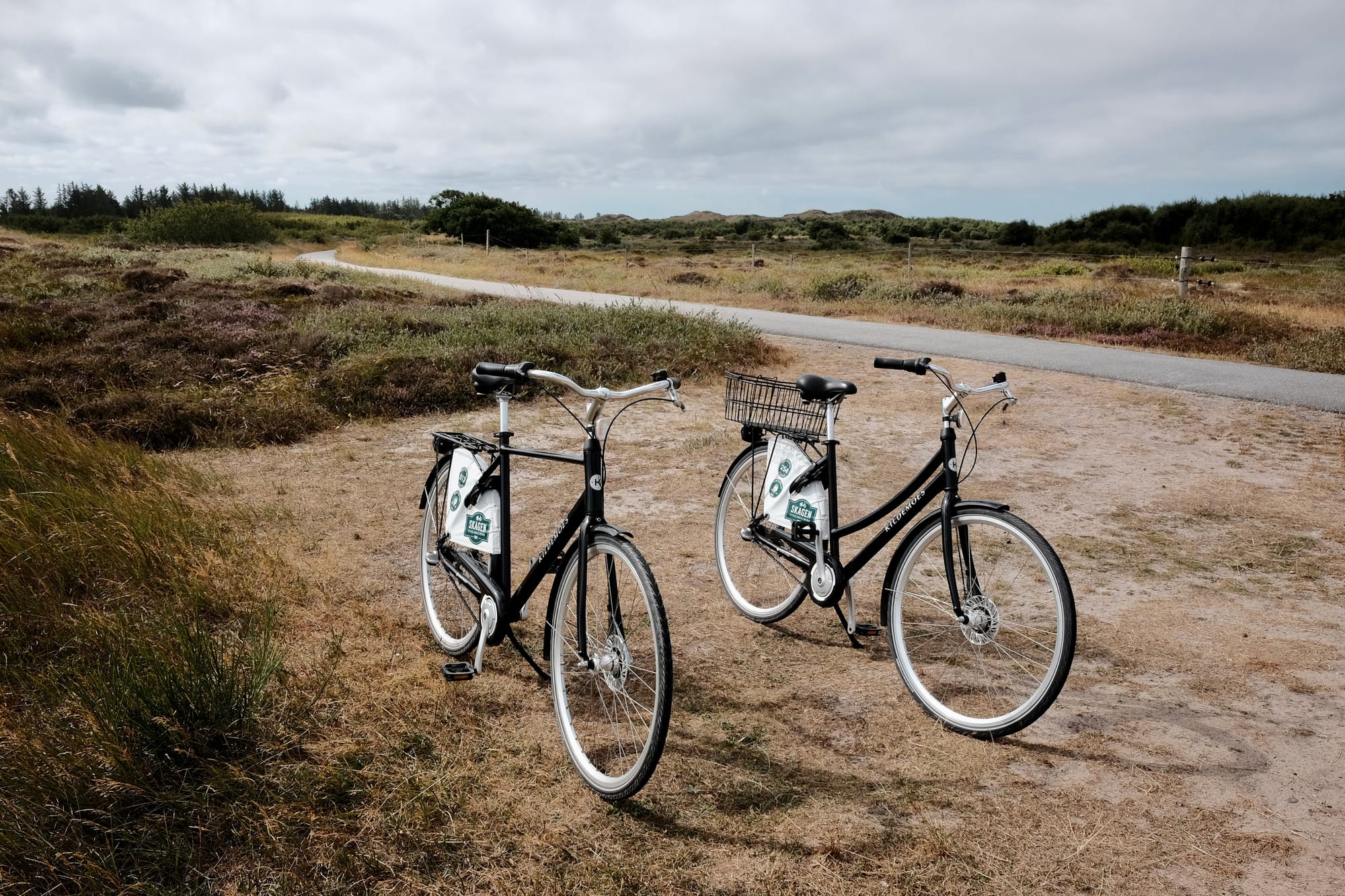
At the hire place, we were greeted by the sight of hundreds – and I mean hundreds – of neatly parked bikes. The proprietor picked out three for us. They were Kildemoes, a classic Danish brand. Designed for riding in an upright position on flat terrain, the bikes had three gears, a front disc brake and a rear coaster brake. Kickstands, racks and a basket made them resolutely practical.
Cycling was the obvious way for us to get around during our stay in Skagen, a town at the tip of Denmark's North Jutland region. So, having arrived from Sweden by ferry and train the previous evening, our first errand the following morning was to the cykeludlejning (bike rental) recommended by our host.
I love walking, but I think cycling through a landscape, urban or rural, produces a fundamentally different experience.
I’ve been thinking a lot lately about how places reveal themselves when we cycle through them. Much of the literature of place writing, of psychogeography, uses walking as the means of discovery. I love walking, but I think cycling through a landscape, urban or rural, produces a fundamentally different experience.
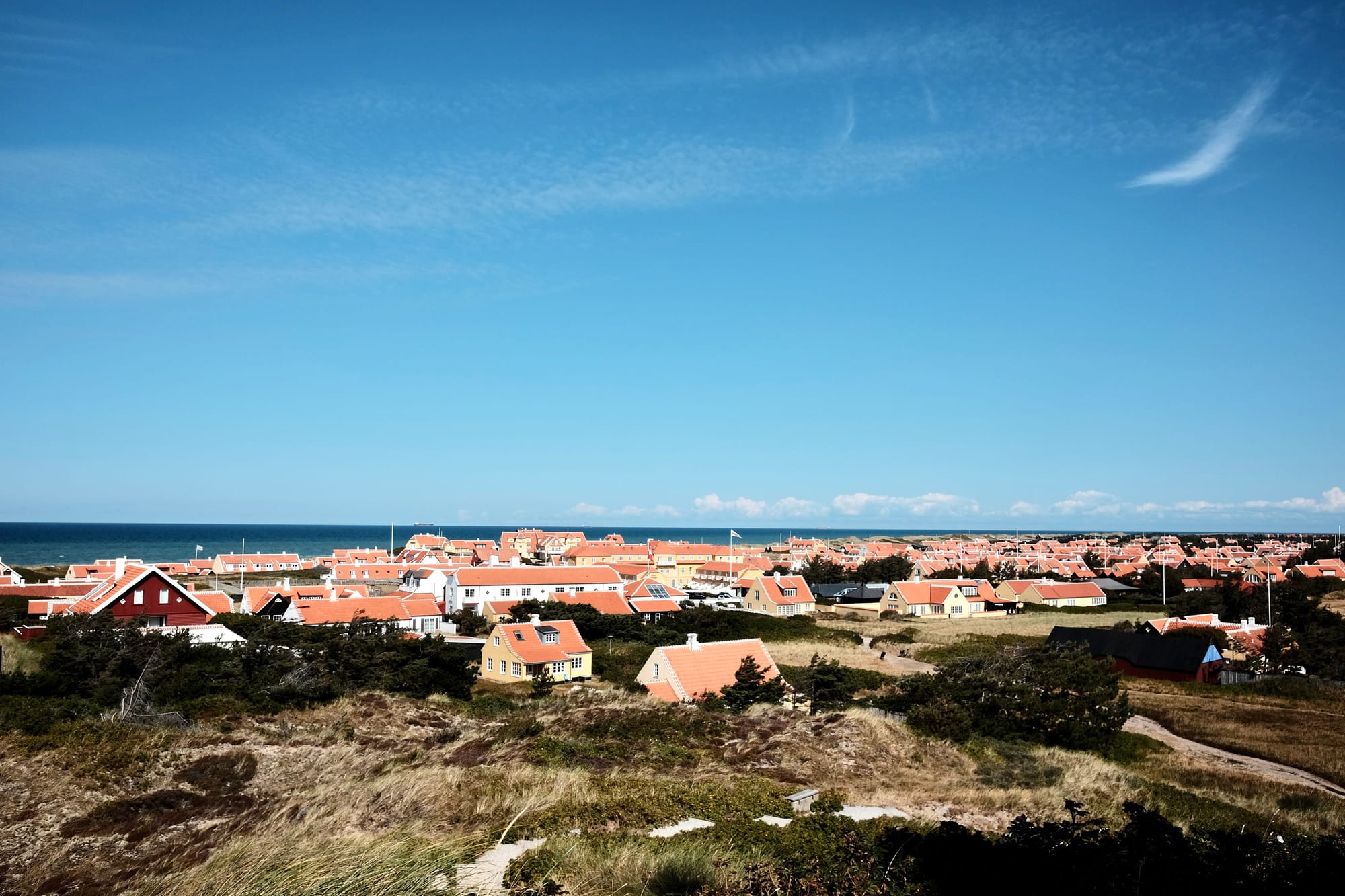
There was, after all, nothing particularly Danish about our stroll to pick up the bikes. I don’t mean the views, which were filled by the town’s bright yellow houses with their orange-tiled roofs. Or the soundscape, which was punctuated by ship horns from the port. I mean the act of walking itself.
Our movement through this place, the way we interacted with the surface and surroundings, was really no different. Walking down one pavement is much like walking down any other. Sure, we were participating in the landscape more than if we’d been shut inside a car. But we still didn’t have to engage with it fully. That changed when we climbed on the bikes and pedalled out into the streets.
Cycling’s demands on brain and body meant we were feeling and thinking our way through the place. The bikes were distinctly Danish. The coaster brake, activated by applying backwards force to the pedals, was especially unfamiliar. As was riding on the right and navigating the local bike paths, which demanded more of our attention than at home.
The ways in which different methods of movement affect our perception of places has been the subject of academic research. During our trip through Scandinavia, I came across geographer Justin Spinney's work. Justin is now Professor of Transport and Mobility Studies at UWE Bristol, but in the summer of 2003, he rode up Mont Ventoux, the iconic road-cycling climb in Provence, interviewing other riders for his MA research as he went. Justin was kind enough to share a copy of a paper he published based on his MA dissertation: 'A place of sense: a kinaesthetic ethnography of cyclists on Mont Ventoux'.
In the paper, Justin argues that ‘our movements in and through a place ultimately define our engagement with it and constitute it as a place’. Through his conversations with riders and his own experience of the exhausting climb, he concludes that ‘we do not simply see from the bike’. Instead, ‘we feel from it’. The landscape ‘is called forth by numerous different rhythms and sensations’. On a bike, Mont Ventoux becomes a ‘place of panoramic views and exertion-tunnelled vision’.
Pedalling sturdy Kildemoes bikes along Skagen’s cycle paths is very different from ascending Mont Ventoux, but I think the rhythm of the pedals taps out some universal truths. As Justin writes:
Once the body and bike have learnt how to move forwards continually, the rider inhabits a moment of repetitive difference, where the external landscape appears to take on the characteristics of the repeated action: always and never changing, just as each pedal stroke is seemingly the same but never the same twice.
In my experience, some landscapes are particularly open to revealing themselves to the cyclist. These are ‘big’ places, where the rhythm of cycling matches the natural rhythm of discovery. Our ride to Råbjerg Mile, south of Skagen, was like this. The destination was big (northern Europe’s largest shifting sand dune) and so was the route (through 10km of vegetated dunes on a purpose-built cycle path, the Hulsigstigen).
In a car, we would have followed the main road and missed our immersion in the dunes. On foot, the distance – we'd covered 30km by the end of the day – would have felt dispiriting. Cycling allowed us to both progress through the landscape and stop easily to rest, snack or soak in the view.
It was the breeze we rode into, the turn of the pedals and the clicking of the bicycle hubs.
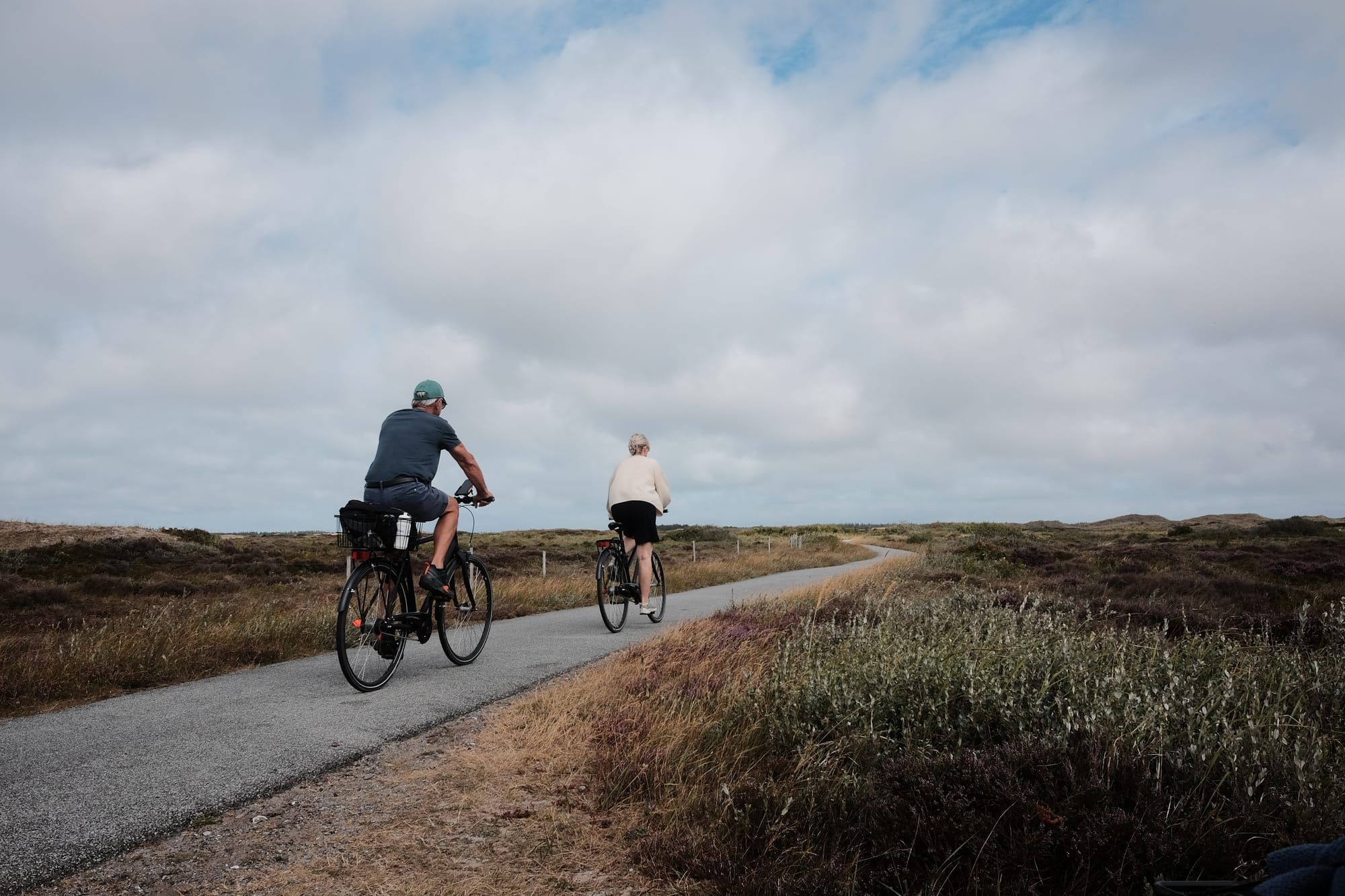
We’d seen the purple-heathered dunes, and the cycle path snaking through them, from the train. Now it was more than a view; it was the breeze we rode into, the turn of the pedals and the clicking of the bicycle hubs. With only three gears, it was rarely worth changing up or down. So we rode along in second gear and felt each rise or fall of the undulating path in our legs as we pedalled in line through the heathland.
From Hulsig, where the path ended, we followed roads – and a procession of German tourists in camper vans – the rest of the way to Råbjerg Mile. Parking our bikes, we proceeded on foot, following paths through the soft sand up to what appeared to be the summit of the dune. It turned out to be just a foothill. This huge, shifting system blurred our concept of scale. When we finally reached its highest point, perched atop 4 million cubic metres of sand 40 metres above sea level, we felt tiny.
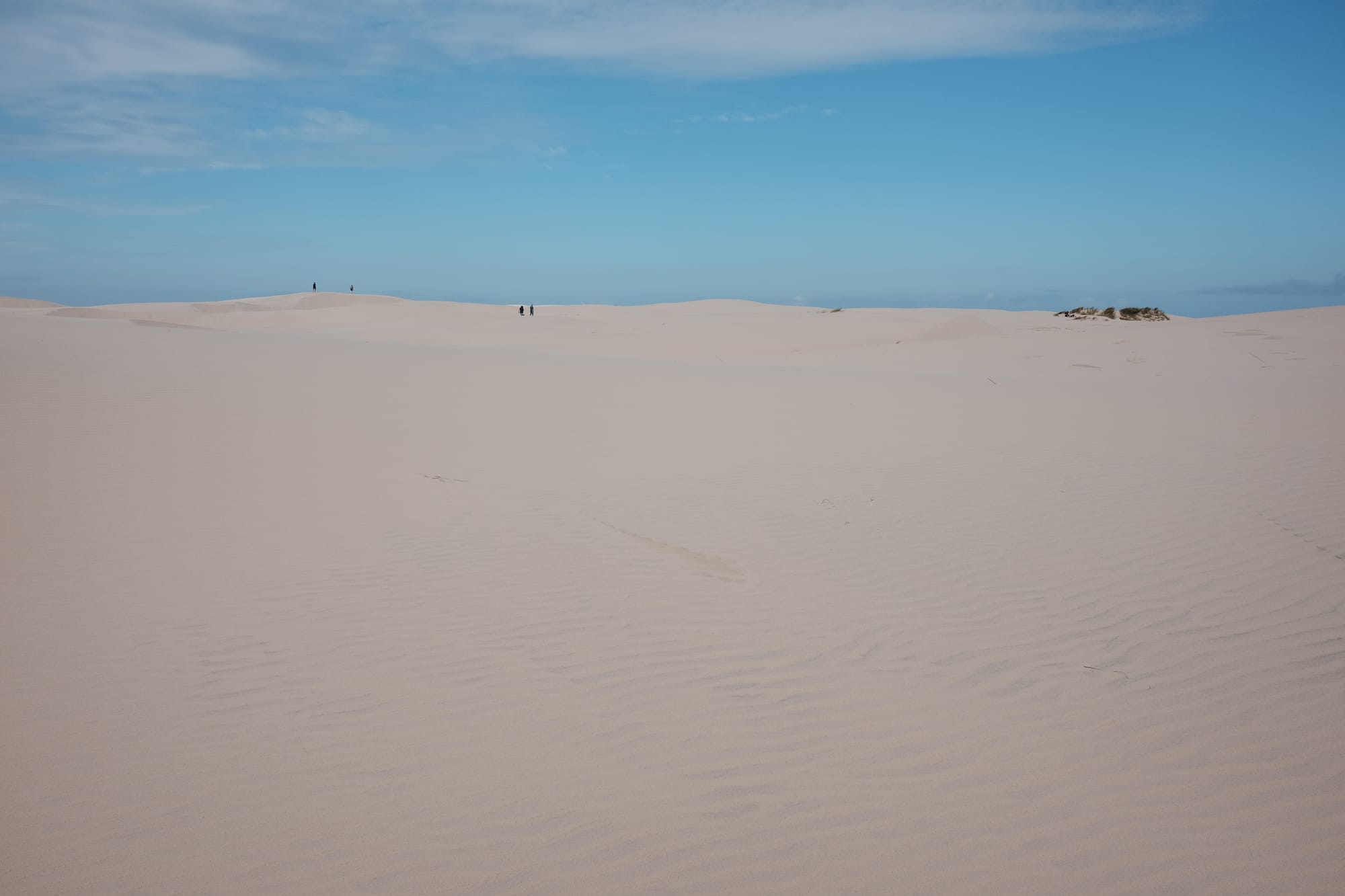
Steady progress is the rhythm of the dune. It’s impossible to ascend steep slopes of sand quickly: the faster we walked, the faster the sand slid from beneath our feet. If we stood still, the blowing sand accumulated around our shoes, prompting us to move again. Constant movement. At the edge of the sand, half-buried trees show how the wind is blowing the dune across the land. Råbjerg Mile moves around 18m each year, heading inexorably towards the Kattegat sea. It seemed fitting to have reached this place by cycling, a movement of steady rhythm.
The same wind that shifts the sands shapes the experience of cycling on the peninsula. Our outward leg had been a journey of discovery, pushing against the wind and gentle inclines to bring each new element of this place into view. On the return, a tailwind allowed us to slip the bikes into top gear and speed along the flats. The landscape compressed, and what had felt distant began to seem comfortably in range of our bikes and bodies.
Over a few days, we grew to know the bikes, to understand how they wanted to be ridden. Returning them at the end of our stay felt like leaving part of ourselves behind. It was easy to agree with five-time Tour de France winner Jacque Anquetil’s assertion, which Justin refers to in his paper, that a rider is both bike and person.
Bicycles are not just objects; they’re tools for living – using them shapes how you experience the world. A bike comes alive when you ride it, and riding a bike brings places around you to life.