
Solstice promise
On the darkest evening of the year, I’m vowing to forge a deeper relationship with the places where I walk and cycle.

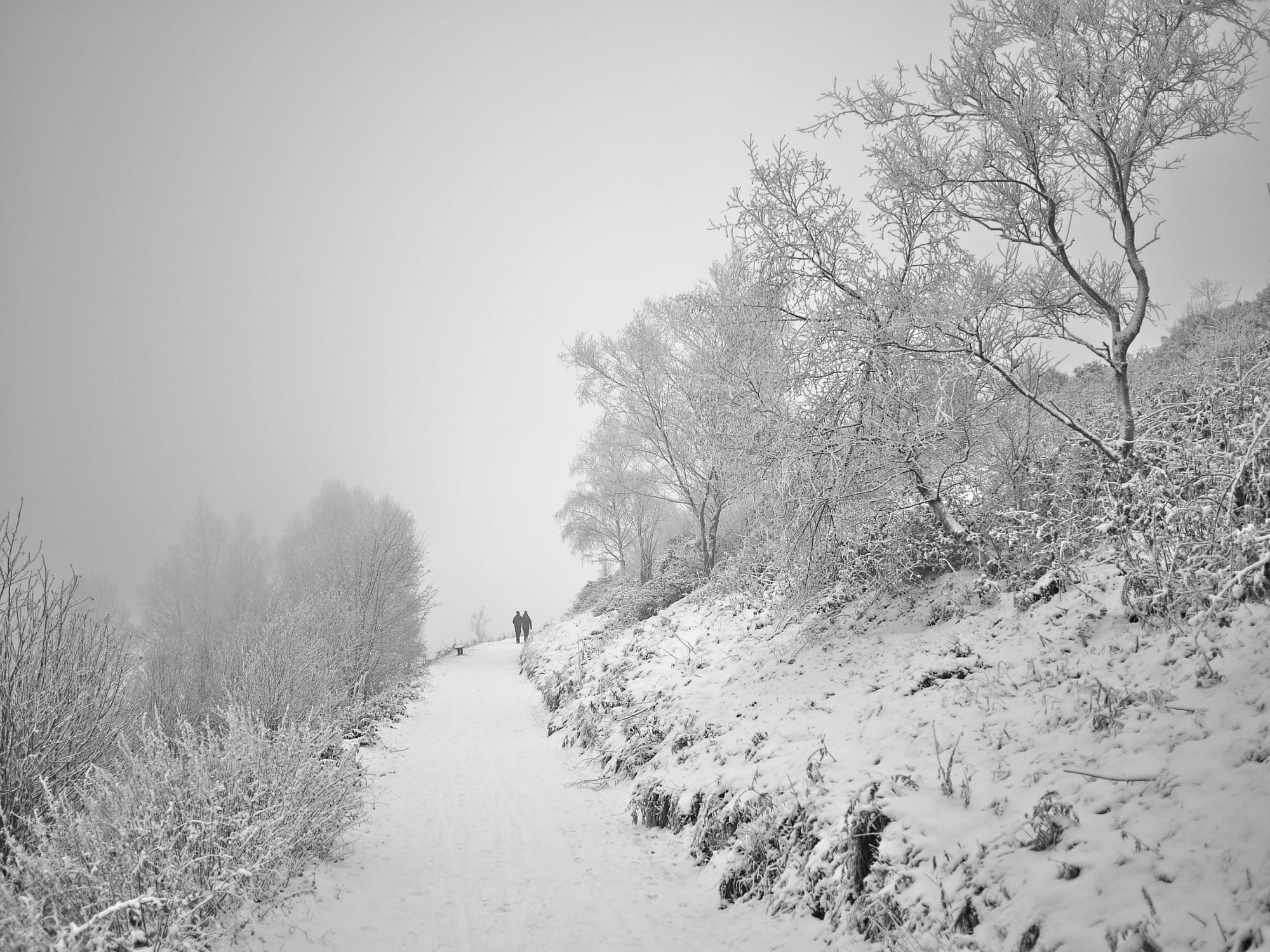
Does it snow at Christmas where you live? Here in Middle England, significant snowfall at this time of year is rare. Instead, we have wet, grey days that dull my enthusiasm for walks and bike rides, driving me indoors to catch up on tasks I abandoned during the fullness of summer.
Today I was sorting through old photos when I found the images that illustrate this post. They’re from Christmas fifteen years ago, taken amidst the coldest December for 100 years. That day, J and I walked over the hills to visit my parents. The snow had thrown its usual stillness over the world, but it was the cold I remember most clearly.
As we walked, wrapped up against the biting air, the cold froze into our lives.
Temperatures dipped to -10°C. The air clawed at my lungs. This wasn’t a fleeting snowfall, a gone-by-lunchtime time out from the Christmas routine. This snow was here for the holidays. As we walked, wrapped up against the biting air, the cold froze into our lives. We knew the ageing boiler in our house would struggle, that we’d spend the next week layered in sweaters.
Having to adjust our lifestyles to cold weather is unusual these days; as a society, we’ve become estranged from seasonal rhythms thanks to the comfortable way we live. We can keep our centrally heated homes at the same temperature year-round. We can use our cars as overcoats, dashing the short distance from them back into the warmth.
Living like this might avoid inconvenience and discomfort, but it also isolates us from our surroundings. ‘To take walks in fair weather alone – remaining indoors during wind, rain or snow – is to forego half of the experience,’ wrote the explorer and philosopher Erling Kagge. ‘Maybe even the better half.’