
The Wayfarer’s Way
Walking on the Sentiero del Viandante in the footsteps of wayfarers, traders and smugglers is a reminder that journeying on foot was once part of everyday life.


We set out from our rented apartment in Varenna to walk a short section of the Sentiero del Viandante, the Wayfarer’s Way, to Bellano. Stretching around 60km from Abbadia Lariana to Piantedo, the trail was created in 1989 but follows a network of much older ways. These ancient mule tracks connected the lakeside towns with mountain hamlets.
“There’s a path along the eastern branch of Lake Como that seems to play with the water like a stone skipping across its surface,” says the website of Italae, a programme established to promote Italian culture and history. “It touches the shore, then climbs through chestnut woods and terraced hills, brushes against ancient villages, and returns once again to the lake.”
For us, this meant a day of leg-sapping climbs up wooded hillsides. With their summits came only the briefest of respite; the land soon dropped away into steep and tricky descents. Then another climb, followed by another descent. And another. It was tough going. Drifts of autumn leaves masked the loose stones underneath our feet, forcing us to pick our way carefully down the tracks to avoid sprained ankles. Why would travellers, pilgrims and armies choose to come this difficult way?

It’s hard to imagine now, but, across cultures, walking was the default mode of transport for centuries – even into the age of steam and especially in rural areas. Most people had no other way of getting around. In his excellent book about the history of walking in the UK, The Lost Paths, Jack Cornish digs up a government report from 1867, which found that ‘children (some as young as ten) and women working in agriculture would walk between four and ten miles a day to and from work’. Life would not have been so very different along the shores of Lake Como.
There were also particular forces of nature and history steering wayfarers off the waters of Lario, as Lake Como is known, and on to the mule tracks. I read later, back at the apartment, about the cast of shady aristocrats, warlords and outright pirates who vied for control of the lake through the centuries. You’d go out of your way to avoid the attentions of someone called Giovanni the Mad, wouldn’t you?
If the pirates didn’t kidnap you, the winds might have sunk you. The gentle Tivano wind blows from the north during the morning. In the afternoon, the stronger, southerly Breva dominates. There’s also the chance that the Ventone could descend from Val Chiavenna. It brings powerful gusts and, like an unwelcome visitor, can stay several days. Then there’s the Foehn, a dry, warm northern wind that usually calls in winter. And the Menaggino, harbinger of violent summer thunderstorms.
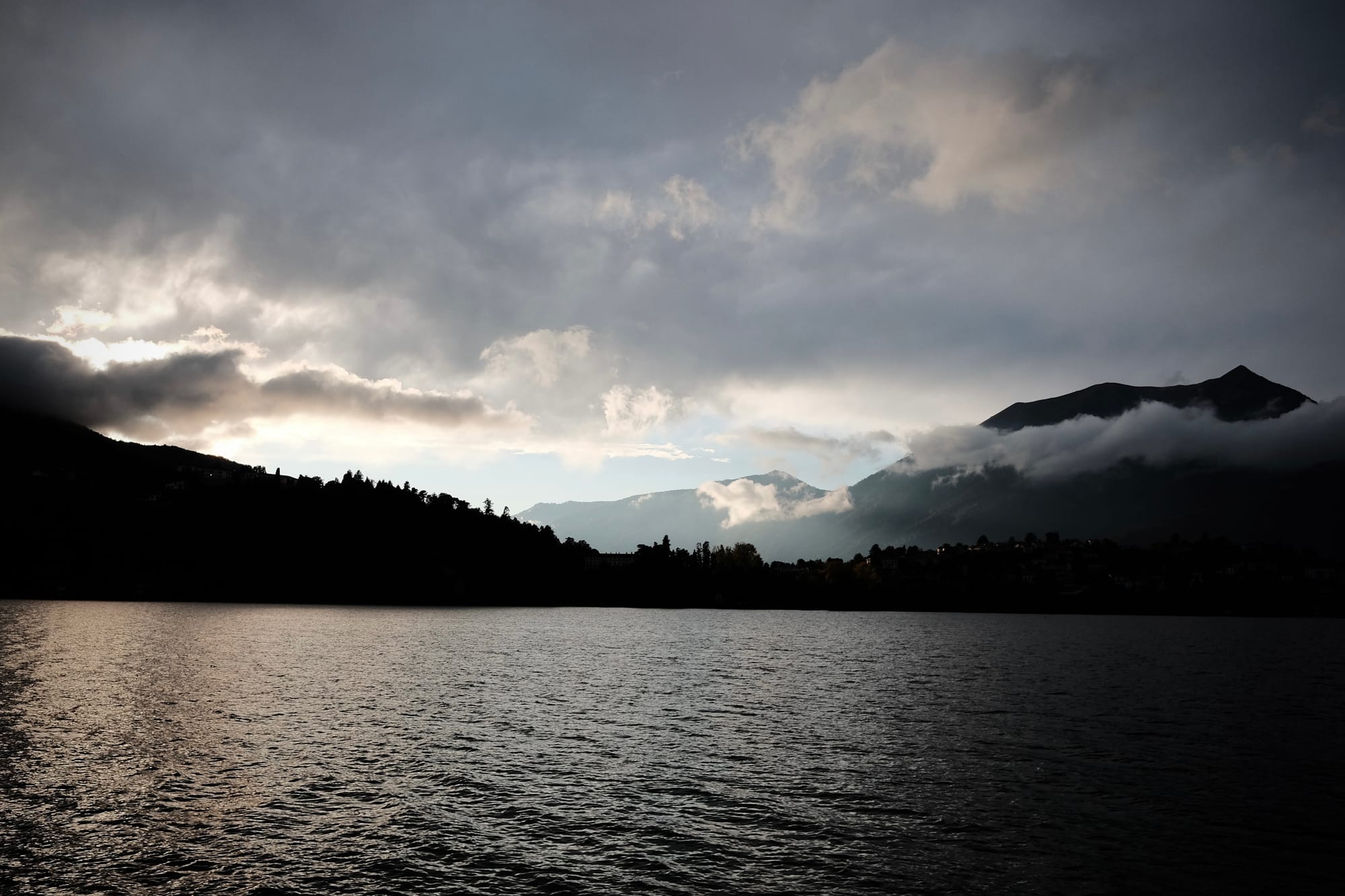
The local sailing club’s leaflet describes how it's possible to set out on a calm day only to find yourself under a blustery wind amidst rough water. It’s just as likely that you’ll be sailing fast under a good wind, only to become becalmed in the middle of the lake for hours on end. During our stay we found that the winds had brought heavy rain, which washed debris into the lake and disrupted the fast hydrofoil ferry services. I could see why – in the absence of the modern lake-shore roads – travellers and their mules would have chosen the hillside trails.
We didn’t meet any wayfarers on our walk. No pilgrims. No ramblers. Nobody, in fact. Leaving the apartment that morning, we had passed crowds of late-season tourists wheeling their suitcases from the train station towards the Menaggio ferry. None of them seemed to have ventured in the other direction to explore the trails. So it was something of a shock when we emerged from the high woodland into the outskirts of Bellano to find traffic jammed around the train station. Life, it seemed, had been going on just the same while we had been stepping back in time.
As we waited for a train to take us the short way back to Varenna, I thought about our walk. A footpath doesn’t hold the same attraction for tourists as a villa by the glistening waters of Lake Como or a grand English stately home packed with shining silverware. But a path is just as important for understanding the history of a place and its people. The path, after all, is how most of them travelled in their daily lives. So, for us, it offers chance to walk in their footsteps. And, unlike the villa or the stately home, there’s no entry fee.